

Have you ever looked at a stunning photo and wondered how it looks so bright, sharp, and real? Well, the secret behind those jaw-dropping pictures often comes down to one simple question what is a DSLR camera?
A DSLR camera, also known by its DSLR camera meaning Digital Single-Lens Reflex is a type of camera that uses a combination of mirrors, lenses, and sensors to capture high-quality images. While smartphone cameras are super convenient, a DSLR gives you total control over your photos, helping you decide exactly how light, color, and focus should look. It’s like having a creative superpower in your hands.
A quick fact for you: according to a 2024 photography market report, over 25 million DSLR cameras are still in active use globally. Even though mirrorless cameras are trending, DSLRs remain popular among professionals and hobbyists because of their rugged design and reliability.
When you compare a DSLR vs mirrorless camera, you’ll notice one key difference DSLRs use a mirror system and optical viewfinder, while mirrorless cameras rely on electronic screens. That mirror gives you a real-time optical view of your subject, which many photographers still prefer for accuracy.
Understanding the Basics: What Does DSLR Stand For?
Before we get into the deep stuff, let’s break down the term DSLR camera meaning clearly. The full form of DSLR is Digital Single-Lens Reflex and each word has a story to tell.
- Digital – It means the camera captures and stores images electronically rather than using old-school film.
- Single-Lens – This shows that both the viewfinder and the camera sensor use the same lens to view and capture the image.
- Reflex – This refers to the mirror mechanism that “reflects” light from the lens up into the optical viewfinder so you can see the scene directly.
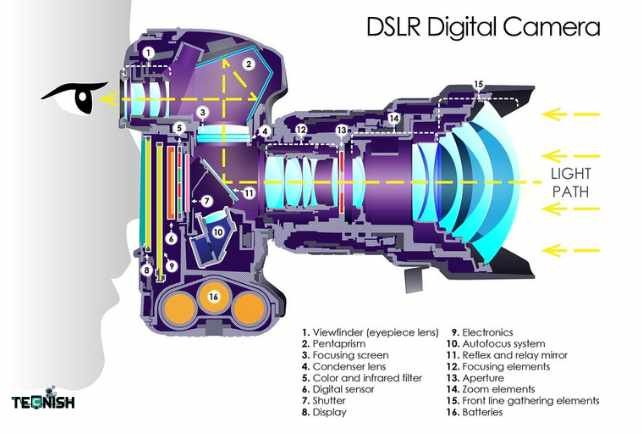
So basically, when you press the shutter button on a DSLR camera, the mirror flips up, allowing light to reach the image sensor in DSLR camera, which captures the picture. That entire light journey from lens to sensor defines how does a DSLR camera work.
To understand what is a DSLR camera better, let’s take a short trip down memory lane. Before DSLRs, there were SLR cameras that used film rolls instead of digital sensors. DSLRs became popular in the early 2000s by combining digital technology with the familiar SLR design. Over the years, companies like Canon, Nikon, and Sony some of the best DSLR camera brands have kept improving these cameras with better autofocus and image stabilization, faster processors, and advanced ISO shutter speed aperture controls.
The types of DSLR cameras available today range from entry-level ones for beginners to high-end models for professionals. If you’re new to photography, a DSLR camera for beginners is perfect easy to use yet powerful enough to grow your skills. You can later upgrade to more advanced versions as you learn how to use a DSLR camera properly.
The magic of DSLRs lies in their DSLR lenses and focal length options. You can swap lenses depending on what you’re shooting wide landscapes, portraits, or close-ups. Some people say the best lens for DSLR camera is the 50mm prime lens because it mimics natural human vision and gives beautiful background blur, known as bokeh.
Fun fact: The first Digital Single-Lens Reflex camera prototype was made by Kodak in 1991, and it completely changed the photography industry. Since then, the technology has evolved to include advanced DSLR camera features like built-in Wi-Fi, live view, and full HD video recording.
So next time someone asks you, “What is a DSLR camera?” you can confidently say:
“It’s a digital camera that uses a mirror and a single lens to reflect light into an optical viewfinder letting you see exactly what your photo will look like before you even press the button.”
And that’s not all understanding how does a DSLR camera work is just the start. The deeper you go, the more fascinating it becomes. Up next, we’ll explore the simple science behind the mirror system and how that magical “click” captures your favorite moments forever.
How a DSLR Camera Works: The Simple Science Behind It
Now that we know the DSLR camera meaning, let’s dive into how does a DSLR camera work. Don’t worry we’ll keep it super simple.
Imagine light as a traveler. It enters through the DSLR lens, bounces off a mirror inside the camera, passes through a prism, and lands in your eye when you look through the viewfinder. That’s how you see what your lens sees. The moment you press the shutter button, the mirror flips up and the light hits the image sensor in DSLR camera, creating your photograph.
Here’s a quick step-by-step of how this light journey happens inside your camera:
- Light enters the lens the gateway to your image.
- It reflects off the mirror inside the camera body.
- That light travels up through a prism into your viewfinder so you can see the exact frame.
- When you press the shutter, the mirror flips up, letting light hit the sensor.
- The sensor converts that light into an image your beautiful photo!
That’s the heart of what is a DSLR camera it uses a mirror system to let you see through the lens directly, unlike a mirrorless camera that uses a digital screen. This is also why DSLRs have that satisfying “click” sound it’s the sound of the mirror flipping up and down.
A DSLR’s ISO shutter speed aperture trio controls how bright or dark your picture will be. Together, they form what photographers call the Exposure Triangle. If you learn to balance them, you’ll start taking photos that look professionally lit even without filters.
So, when someone asks you how does a DSLR camera work, you can tell them it’s all about light, mirrors, and timing a little dance of mechanics and magic that captures perfect moments.
Key Components of a DSLR Camera
To understand what is a DSLR camera completely, let’s peek inside and meet its main parts. Every DSLR, no matter the brand, has these key components working together like a team.
1. Lens
The lens is the eye of your camera. It focuses light onto the image sensor in DSLR camera. You can change lenses depending on what you’re shooting landscapes, portraits, or close-ups. Wide-angle lenses see more, while telephoto lenses zoom in close.
If you’re exploring DSLR lenses and focal length, you’ll find two main types:
- Prime lenses: Fixed focal length, sharper images.
- Zoom lenses: Adjustable focal length, more flexible.
The best lens for DSLR camera often depends on your photography style. Beginners love the 50mm prime lens because it’s affordable, lightweight, and produces dreamy background blur (called bokeh).
2. Mirror Box and Optical Viewfinder
The mirror box is what makes a DSLR special it reflects the scene from the lens into the viewfinder using mirrors and prisms. That’s the “reflex” in Digital Single-Lens Reflex.
3. Image Sensor
This is the heart of your camera. The image sensor in DSLR camera captures light and turns it into an electronic image. Larger sensors mean better detail, low-light performance, and rich colors.
4. Shutter Mechanism
The shutter controls how long light hits the sensor. Combine this with ISO shutter speed aperture adjustments, and you can freeze motion, blur backgrounds, or create bright night shots.
5. Processor and Memory Card
The processor acts like your camera’s brain. It reads the image data, processes it, and stores it on your memory card. Modern DSLRs use powerful processors that enable high-speed shooting and full HD video.
If you’re also into security gadgets, Tecnish has a fascinating comparison of smart and spy cameras check out Top 5 Spy Cameras That Connect to Phones to see how advanced tech is changing the way we capture and monitor moments.
Understanding these components makes learning how to use a DSLR camera easier because each button and part has a job to do. Once you know them, you’re not just pressing buttons; you’re controlling light itself.
If you love diving deeper into photography tools, check out our Tech Blogs section for hands-on reviews and camera comparisons that make learning fun and practical.
DSLR vs Mirrorless Cameras: What’s the Difference?
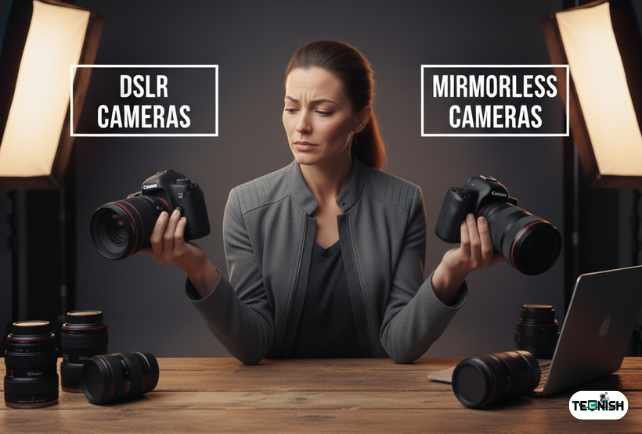
You’ve probably heard about the DSLR vs mirrorless camera debate. So, what’s the real difference? Let’s make it simple.
A DSLR camera uses a mirror system to reflect light into an optical viewfinder. A mirrorless camera, as the name suggests, doesn’t have that mirror. Instead, it sends light directly to the image sensor and displays the image digitally on a screen.
| Feature | DSLR Camera | Mirrorless Camera |
| Viewfinder Type | Optical (through mirror) | Electronic (on screen) |
| Battery Life | Longer | Shorter |
| Body Size | Larger | Smaller |
| Autofocus Speed | Very fast (especially optical systems) | Fast but depends on model |
| Weight | Heavier | Lightweight |
| Lens Availability | Wide variety | Growing fast |
When comparing what is a DSLR camera to a mirrorless one, remember: DSLRs give a more natural viewing experience through the optical viewfinder, while mirrorless cameras offer live previews on the screen.
If you’re just starting, a DSLR camera for beginners can be easier to handle and learn from because it feels more stable in your hands. Many professionals still use DSLRs for their autofocus and image stabilization precision, long battery life, and rugged build.
For example, brands like Canon and Nikon continue producing some of the best DSLR camera brands that remain favorites among enthusiasts.
Why Choose a DSLR Camera Over a Smartphone?
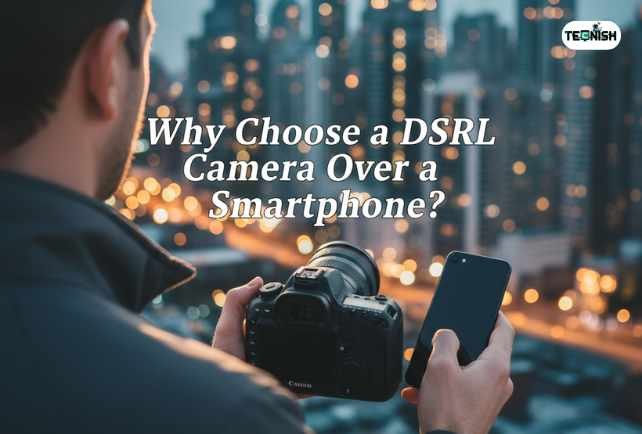
Now that you know what is a DSLR camera, you might be wondering “Why not just use my phone?” Great question!
Smartphones are amazing for quick snaps, but they still can’t match the advantages of DSLR camera technology. Here’s why:
- Image Quality:
DSLRs have larger image sensors, which capture more light and detail. This means sharper images and less noise especially in low light. - Lens Flexibility:
Unlike phones, DSLRs allow you to swap lenses. Whether it’s a zoom lens for wildlife or a prime lens for portraits, your camera adapts to your vision. - Manual Control:
With a DSLR, you get full control over ISO shutter speed aperture settings, allowing you to create your own photographic style instead of relying on filters. - Creative Depth:
The ability to blur backgrounds and highlight subjects gives DSLR photos that cinematic, professional feel. - Durability:
DSLRs are built to last. They’re designed for outdoor adventures, long shoots, and unpredictable weather.
When learning how to use a DSLR camera, you also start understanding how light behaves something phone cameras often do automatically. That’s how photographers turn from beginners to artists.
To stay updated with the latest tech and photography trends, visit our Tech News page for smart gadget updates and photo gear insights.
So yes, smartphones are convenient, but once you experience the control and power of a DSLR, you’ll understand why DSLR cameras are still worth it even in a world full of high-end phones.
Types of DSLR Cameras: Entry-Level, Mid-Range, and Professional
Now that you understand what is a DSLR camera, let’s look at the different types of DSLR cameras available in today’s market. Not all DSLRs are built the same some are made for beginners, some for hobbyists, and others for full-time professionals.
1. Entry-Level DSLRs
If you’re a beginner, an entry-level DSLR is your best friend. These cameras are easy to use, lightweight, and have guided menus that help you learn how to use a DSLR camera step-by-step. They’re perfect for people who are just starting out or switching from smartphones.
Popular entry-level models include the Canon EOS Rebel series and Nikon D3500. These cameras teach you the basics of focus, light, and composition all while keeping things simple.
2. Mid-Range DSLRs
Mid-range models are for photographers who already know how does a DSLR camera work and want more creative control. They offer faster autofocus and image stabilization, better low-light performance, and more customizable settings.
Think of cameras like the Canon EOS 90D or Nikon D7500 these models strike the perfect balance between quality and price.
3. Professional DSLRs
These are built for experts who shoot weddings, wildlife, or commercial projects. They feature large image sensors, advanced processors, and tough magnesium alloy bodies. The Nikon D850 and Canon 5D Mark IV are top-tier examples loved by professionals worldwide.
If you’re planning to invest in any of these, be sure to visit Tecnish’s Tech Blogs section where we often feature buying guides and product comparisons to help you choose the right gear for your budget.
A simple tip: don’t buy the most expensive camera first. Learn photography first, then upgrade. Even the best photographers started with entry-level gear before mastering what is a DSLR camera inside out.
Understanding DSLR Lenses: The True Game-Changer
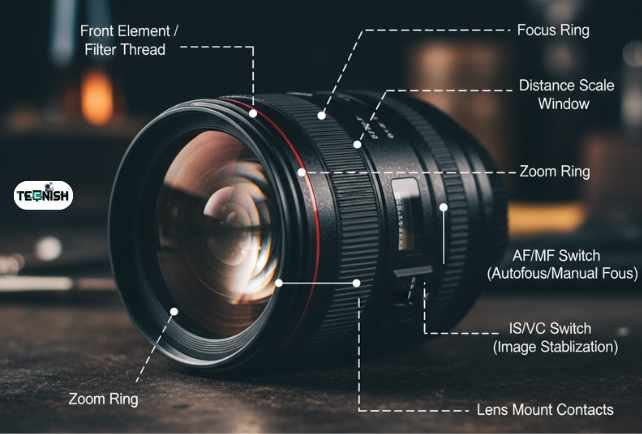
One of the biggest advantages of DSLR camera systems is that you can change the lens anytime you want. That’s something your smartphone can never do!
Your lens choice affects everything from sharpness to depth to background blur. To truly master what is a DSLR camera, you need to understand its lenses.
Prime vs Zoom Lenses
- Prime Lenses have a fixed focal length. They’re sharper, lighter, and ideal for portraits.
- Zoom Lenses let you adjust focal length to capture distant subjects perfect for travel or wildlife photography.
Understanding DSLR lenses and focal length helps you decide how much of the scene you want to include. A smaller focal length (like 24mm) captures wide shots, while longer ones (like 200mm) zoom in tightly.
Aperture and Bokeh Basics
Aperture is the opening that lets light into the camera. It’s measured in f-stops (like f/1.8 or f/4).
A lower f-number means more light and creamier background blur (bokeh). Mastering aperture is key to controlling how your photos look and feel.
If you’re serious about upgrading your gear, check out our Spy Cameras That Connect to Phones article to explore how camera technology is shrinking while maintaining image power a great contrast to DSLR versatility.
The best lens for DSLR camera depends on your goal:
- Portraits → 50mm f/1.8
- Landscapes → 16–35mm
- Wildlife → 70–300mm
Every lens adds a new perspective, making your DSLR more powerful than ever.
Essential Settings Every DSLR User Should Know
Now that you’ve learned what is a DSLR camera and what lenses can do, it’s time to unlock your camera’s full potential through settings. These are what turn ordinary photos into works of art.
The Exposure Triangle
Photography revolves around three main settings ISO, Shutter Speed, and Aperture. These are often called the Exposure Triangle.
- ISO controls how sensitive your sensor is to light.
- Shutter Speed determines how long the shutter stays open (faster for sports, slower for light trails).
- Aperture controls how much light enters through the lens and affects the depth of field.
Balancing these three gives you the perfect exposure. Want to shoot like a pro? Experiment with manual mode instead of auto. Once you understand how does a DSLR camera work, these settings become second nature.
White Balance and Metering
White balance helps your camera interpret colors correctly under different lighting conditions. Metering decides how the camera measures brightness in a scene. Together, they ensure your photos look natural.
Auto vs Manual Mode
Beginners can start with Auto mode while learning, but try to shift gradually to Manual mode. That’s when you truly understand how to use a DSLR camera and gain creative control.
If you want to learn even more about photography and tech gadgets, check out our regularly updated Tech News section we often share tips and guides for enthusiasts and creators.
Common DSLR Features You Should Know About
Modern DSLRs are loaded with smart tools that make capturing perfect shots easier. Understanding these DSLR camera features helps you get the most out of your camera.
Autofocus Systems and Points
Your DSLR’s autofocus system detects subjects and adjusts focus automatically. Advanced models have multiple focus points to ensure your subject stays sharp even when moving. Combined with built-in autofocus and image stabilization, it helps you shoot crisp photos even without a tripod.
Burst Mode and Video Capabilities
Want to capture fast action? Turn on burst mode, which takes multiple shots per second. Many DSLRs also record full HD or even 4K video, making them ideal for vloggers and creators.
RAW vs JPEG
DSLRs let you shoot in RAW (uncompressed) or JPEG (compressed) formats. RAW files hold more data and flexibility for editing, while JPEGs are smaller and ready to share instantly.
Understanding these features not only boosts your confidence but also helps you appreciate why DSLR cameras are still worth it in 2025. They offer real control something no phone camera can match.
If you love reading about cameras, gear, and photography tech, visit our Mobile & Gadgets category for detailed insights and gear updates on Tecnish your go-to place for smart tech guides.
Accessories That Enhance DSLR Photography
Once you know what is a DSLR camera and start shooting with it, you’ll quickly discover that a few accessories can make your experience even better. These tools help you capture sharper, steadier, and more creative shots whether you’re at home or on an adventure.
1. Tripods and Stabilizers
A tripod keeps your camera steady for long exposures, night photography, or self-portraits. It’s also perfect for videos when you need smooth movement. Many photographers combine tripods with autofocus and image stabilization to get incredibly sharp results.
2. Filters
Filters attach to your lenses and help control light or color. For example:
- UV Filters: Protect your lens.
- ND Filters: Reduce light for long exposure shots.
- Polarizing Filters: Cut reflections and make skies look deeper.
3. External Flashes and Remote Triggers
An external flash gives you better lighting control compared to the built-in flash. Remote triggers help you take pictures without touching the camera handy for group shots or capturing wildlife from a distance.
4. Storage and Cleaning Gear
Always carry extra memory cards and batteries. Also, invest in cleaning kits lens wipes, air blowers, and sensor cleaners. These keep your equipment in top shape and are a key part of good DSLR camera maintenance tips.
If you’re curious about other cool gear, the Mobile & Gadgets section on Tecnish often covers accessories and devices that pair perfectly with DSLR and vlogging setups.
How to Maintain Your DSLR Camera for Longevity
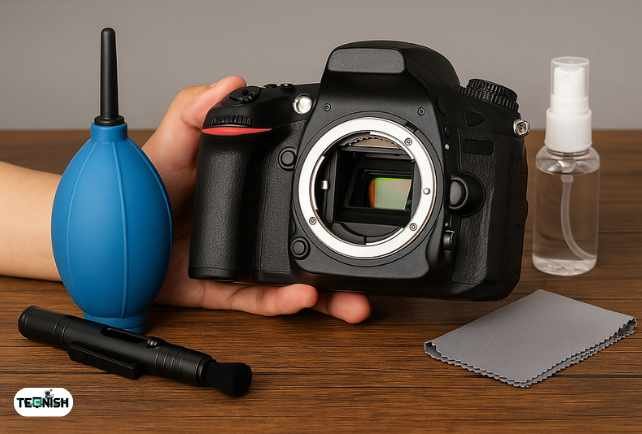
When you invest in a DSLR, maintaining it properly ensures it lasts for years. Think of your camera as your creative partner it needs regular care. So here are some essential DSLR camera maintenance tips.
1. Clean the Lens and Sensor Safely
Always clean your lens with a microfiber cloth. For the image sensor in DSLR camera, use a special cleaning kit or let a professional do it. Never blow into your camera moisture can damage the sensor.
2. Battery and Storage Care
Avoid leaving your battery inside the camera for too long, especially if you won’t be using it for weeks. Keep your memory cards formatted and organized. Backup your photos to an external drive regularly.
3. Firmware Updates
Check your manufacturer’s website for firmware updates. These improve performance, add new DSLR camera features, and fix small bugs.
4. Proper Storage
Store your camera in a dry, cool place. If you live in a humid area, consider a dry cabinet or silica gel packs to prevent mold.
You can read more ways on how to maintain DSLR Camera.
Just like we share in our Tech Blogs, consistent maintenance not only protects your investment but also keeps your photography journey smooth. After all, knowing how to use a DSLR camera also means learning how to care for it.
Advantages and Disadvantages of DSLR Cameras
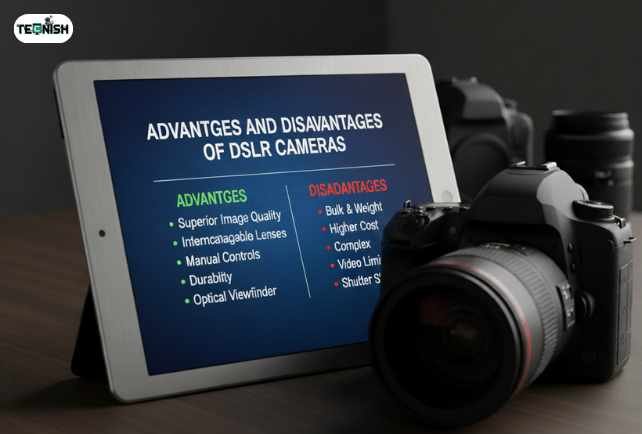
Understanding both sides of the story is key when deciding if a DSLR fits your lifestyle. Let’s look at the advantages of DSLR camera systems and a few limitations too.
Advantages
- Superior Image Quality: Thanks to large image sensors, DSLRs produce crisp, detailed photos.
- Manual Controls: Full control over ISO, shutter speed, and aperture gives creative freedom.
- Interchangeable Lenses: From macro to telephoto, DSLRs handle any shooting style.
- Long Battery Life: Great for outdoor or travel shoots.
- Durability: Built with tough materials that can handle rough environments.
Disadvantages
- Size and Weight: Heavier than smartphones or mirrorless models.
- Learning Curve: Beginners need time to master manual settings.
- Cost of Lenses: Quality glass can be expensive.
Still, the advantages of DSLR camera systems outweigh the downsides for most enthusiasts. Even with the rise of mirrorless cameras, many pros still prefer DSLRs for reliability and performance.
Who Should Buy a DSLR Camera?
So, who exactly benefits most from owning a DSLR? If you’re wondering are DSLR cameras still worth it, the answer depends on your goals.
1. Photography Students & Hobbyists
If you’re learning the basics of photography, a DSLR camera for beginners is ideal. It teaches you the fundamentals light, focus, and exposure which apply to every kind of camera later.
2. Content Creators & Vloggers
Many vloggers and YouTubers use DSLRs because of their autofocus and image stabilization. Paired with a good microphone, they produce cinematic-quality videos. For a related read, check out our Best Camera for Motovlogging in 2025 it compares top vlogging cameras perfect for creators.
3. Travel and Event Photographers
If you love documenting adventures, family events, or nature, DSLRs provide flexibility and endurance that smartphones can’t. Once you understand what is a DSLR camera, you’ll realize how its control helps you tell stories through light and emotion.
4. Professionals
From fashion to sports photography, professionals depend on DSLRs for reliability, interchangeable lenses, and consistent results. It’s no wonder best DSLR camera brands like Canon and Nikon still dominate in the pro world.
To keep up with the latest photography and tech trends, visit our Tech News section for regular updates and expert advice.
Best DSLR Camera Brands and Top Models in the Market
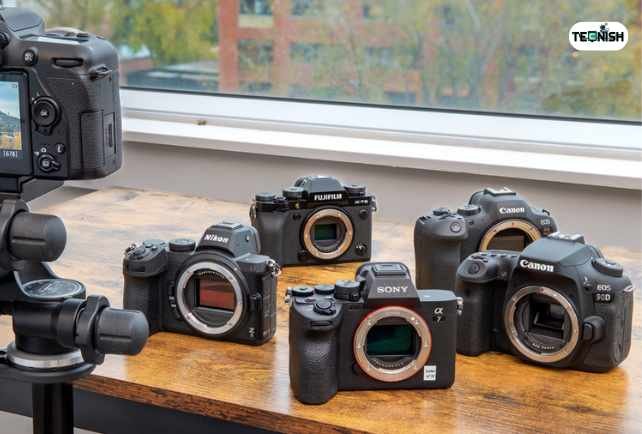
Now, let’s explore some of the best DSLR camera brands that continue to define quality and innovation. These names are trusted worldwide for their craftsmanship, image quality, and features.
| Brand | Popular Models | Highlights |
| Canon | EOS Rebel T8i, EOS 90D, Canon EOS 6D Mark II | Fast autofocus, stunning color science |
| Nikon | D3500, D7500, D850 | Excellent low-light performance and build |
| Sony | Alpha a68, Alpha 99 II | Great hybrid systems with mirrorless tech |
| Pentax | K-70, K-1 Mark II | Weather-sealed, durable design |
If you are still confused, then read The Photographer latest article on Best camera brands 2025.
When choosing a DSLR, consider:
- Your Experience Level: Beginners should go for entry-level models.
- Budget: Start small and upgrade later.
- Purpose: Decide if you’ll use it for travel, content creation, or pro photography.
Once you find the right fit, learning how to use a DSLR camera becomes an exciting journey that helps you unlock your creativity.
How to Get Started with Your First DSLR Camera
So, you’ve learned what is a DSLR camera, explored its types, lenses, and features now it’s time to start your own photography journey. Getting started with your first DSLR doesn’t have to be scary. Think of it like learning to ride a bike: once you get the hang of balance and control, you’ll never forget it.
1. Before You Buy
First, decide what you’ll use your camera for. Do you want to take portraits, travel shots, or videos? This helps you choose the right types of DSLR cameras and lenses.
Visit Tecnish’s Tech Blogs to read buying guides that simplify camera comparisons for beginners.
2. Learn the Basics
Start by learning about ISO, shutter speed, aperture, and how these three make up the exposure triangle. Practice with different light conditions to understand how your DSLR “sees” the world.
Don’t worry if your first shots aren’t perfect every great photographer once asked, “how does a DSLR camera work?” Keep experimenting and reviewing your results.
3. Practice with Auto and Manual Mode
Begin with Auto mode to get comfortable, then slowly move to Manual mode. Manual gives you full creative control and helps you understand how to use a DSLR camera properly.
If you need inspiration or new gadget ideas, our Mobile & Gadgets category is packed with fun, easy-to-follow tech reads.
4. Explore Composition
Try different angles, perspectives, and light sources. Learn the rule of thirds and use your DSLR’s grid lines to improve framing. You’ll be surprised how quickly you start seeing beauty in everyday scenes.
With time, you’ll realize what is a DSLR camera isn’t just about buttons and settings it’s a creative tool that helps you freeze real emotions and stories forever.
The Future of DSLR Cameras: Are They Still Worth It in 2025?
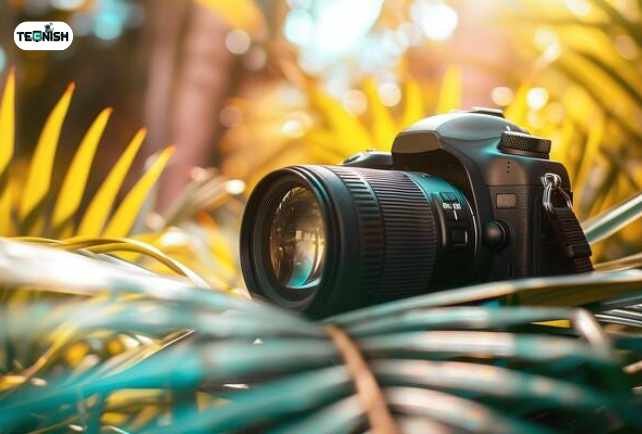
It’s 2025, and technology has evolved fast. Mirrorless cameras are gaining attention, and smartphones now shoot amazing photos. So you might wonder are DSLR cameras still worth it?
The Short Answer: Absolutely, Yes!
Even with new tech, DSLRs continue to shine in image quality, durability, and creative flexibility. Their Digital Single-Lens Reflex design offers an optical viewfinder, letting you see exactly what your lens sees in real time, without delay. That’s something mirrorless screens can’t always match.
Why DSLRs Still Matter
- Battery Life: DSLRs can last for thousands of shots per charge.
- Rugged Build: Designed for outdoor and tough shooting conditions.
- Lens Ecosystem: You have access to decades of compatible DSLR lenses and focal length options.
- True Manual Control: Ideal for those who love learning and mastering photography.
The Trend Toward Hybrid Use
Many photographers now use both DSLRs for professional shoots and mirrorless or smartphones for quick content. The key is understanding DSLR vs mirrorless camera differences and choosing what fits your goals.
In the end, if you appreciate real photography and want complete control, DSLRs are not going away anytime soon. They remain the best foundation for understanding what is a DSLR camera and growing your creative skill.
For future camera insights and gear updates, visit the Tech News section at Tecnish, where we share the latest from the world of photography, AI imaging, and digital gadgets.
Conclusion
We’ve covered everything from DSLR camera meaning to how does a DSLR camera work, the advantages of DSLR camera, and why they still stand strong in 2025. You now know what is a DSLR camera inside and out from its parts and settings to its creative potential.
A DSLR isn’t just a device; it’s a storytelling tool. It helps you slow down, observe, and express emotions that no smartphone can truly capture. Whether you’re a beginner or a professional, the beauty of a DSLR lies in its control, clarity, and connection with the photographer.
So grab your camera, step outside, and start shooting. Because every click is a new memory waiting to be made and every photo you take brings you one step closer to mastering the magic of DSLR photography.
For more photography tips, tutorials, and camera comparisons, check out Tecnish your friendly tech hub for modern creators.
FAQs
1. What is the main difference between a DSLR and a mirrorless camera?
A DSLR vs mirrorless camera mainly differs in its use of mirrors. DSLRs use a reflex mirror and optical viewfinder, while mirrorless cameras rely on digital displays. DSLRs often have better battery life and optical clarity.
2. Is a DSLR still good for photography beginners?
Absolutely! A DSLR camera for beginners offers hands-on learning, manual controls, and real feedback on how light and settings affect images.
3. Which DSLR brand is best for starters?
Some of the best DSLR camera brands for beginners include Canon, Nikon, and Pentax. Models like Canon EOS Rebel and Nikon D3500 are user-friendly and affordable.
4. Can I shoot professional videos on a DSLR?
Yes, modern DSLRs can shoot high-quality Full HD or 4K videos. Pair that with autofocus and image stabilization for smooth and cinematic footage.
5. How do I clean and maintain my DSLR camera?
Follow proper DSLR camera maintenance tips: clean your lens gently, update firmware regularly, and store your camera in a cool, dry place to extend its life.
If you like this article do not forget to drop comments. And for more insightful news and blogs visit Tecnish.