
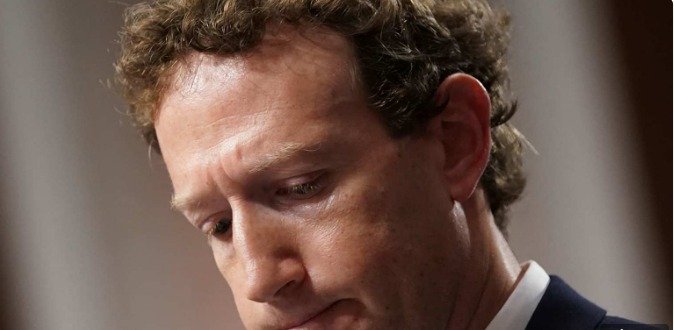

Meta’s AI Spending Sparks Market Panic
That is the main question right that How Mark Zuckerberg Loses $29B in Meta’s Big AI Bet? Meta’s bold AI ambitions just cost Mark Zuckerberg a staggering $29.2 billion in a single day.
On October 30, 2025, the tech billionaire’s net worth plunged—pushing him from 3rd to 5th on the Bloomberg Billionaires Index—as investors panicked over Meta’s aggressive AI spending and a massive $16 billion tax hit.
Why the Drop Happened
- Aggressive AI Investment: Meta plans to spend $70–72 billion on AI infrastructure in 2025, with costs expected to grow “significantly faster” in 2026.
- Massive Tax Charge: ~$16B one-time tax under Trump’s “One Big Beautiful Bill Act.”
- Stock Market Reaction: Share prices dropped due to short-term investor fears.
Massive AI Investments
Meta plans to spend $70–72 billion on AI infrastructure in 2025, with costs expected to grow “significantly faster” in 2026.
To fund these ambitions, the company launched a record $30 billion bond sale, which was oversubscribed 4x, signaling strong investor confidence in the long-term AI strategy.
Meta’s AI Strategy & Bond Market Confidence
To fund its AI ambitions, Meta launched a record $30 billion bond sale, the largest investment-grade corporate bond offering in the U.S. since 2023.
It was oversubscribed 4x, with $125B in orders, showing that bond investors remain confident in the company’s long-term AI strategy despite equity market skepticism.
Earnings vs Expectations
- Revenue: $51.2B (expected $49.5B) ✅
- EPS: $1.05 (expected $6.72) 😌
- EPS without tax: $7.25 (would have exceeded expectations)
Despite strong revenue, the one-time tax and heavy AI spending hit earnings, contributing to the stock decline.
Market Skepticism on AI ROI
While Meta’s AI ambitions are massive, current AI revenue across Big Tech is only $15–20 billion annually, making investors cautious.
The contrast between stock market reaction and bond market confidence highlights the ongoing debate about short-term losses vs. long-term AI dominance.
Lessons and Implications for Marketers
Taking risks with a big budget is natural, but long-term innovation is essential.
AI can help create new types of connections with customers through marketing automation and personalization.
Current trends show that AI is becoming indispensable in blogging, social media, and data-driven marketing.
Marketers should follow AI trends and incorporate them into their strategies, while maintaining a balanced budget.
Key Takeaway
Zuckerberg is betting big on AI, accepting short-term financial turbulence for potential long-term supremacy in artificial intelligence. For investors and tech enthusiasts, Meta’s journey remains a high-stakes story to watch.
Final Verdict
Meta’s $29B AI investment shows that making bold moves is essential to leave a significant mark in the tech world. While there are short-term losses, such investments are crucial for future AI-driven marketing and business growth. For digital marketers, this presents both new opportunities and significant challenges.
This article can also be repurposed as a social media content series, infographic, or webinar material, highlighting the growing importance of AI in marketing strategies.
Insights like these provide valuable, actionable content for your audience while demonstrating your marketing expertise.
Frequently Asked Questions (FAQs)
1. Why did Mark Zuckerberg lose $29 billion in one day?
Mark Zuckerberg’s net worth dropped due to Meta’s aggressive AI spending plans and a massive $16 billion tax charge, which caused the company’s stock to fall by 11% on October 30, 2025.
2. How much is Meta investing in AI?
Meta plans to spend between $70–72 billion on AI infrastructure in 2025, with even faster growth projected in 2026 as it builds large-scale AI models and data centers.
3. What is the “One Big Beautiful Bill Act”?
This is a new U.S. tax reform introduced under President Trump, leading to a one-time $16 billion tax expense for Meta and affecting its quarterly earnings.
4. How does Meta’s AI investment affect marketers?
For marketers, Meta’s focus on AI signals a future where automation, personalization, and data-driven strategies will dominate digital marketing. It’s a wake-up call to integrate the best AI tools into their own workflows.
5. Will Meta’s AI bet pay off in the long run?
Experts believe that while short-term losses are significant, Meta’s massive AI investment could position it as a leader in the next phase of artificial intelligence and business innovation.