


Critical Cybersecurity Updates You Can’t Ignore are more important than ever in 2025. Cyberattacks are getting smarter, faster, and more costly than ever—and 2025 is shaping up to be one of the most dangerous years for businesses and individuals alike. In fact, recent global breaches—from supply chain compromises to sophisticated ransomware campaigns—have cost organizations millions in downtime, recovery, and lost trust.
The reality is stark: one unpatched vulnerability, one misconfigured cloud setting, or one weak login could be all it takes for attackers to break in. Cybersecurity updates are no longer optional—they are survival strategies.
In this guide, we break down the most critical cybersecurity defenses you must implement in 2025 from zero-day patching and phishing-resistant multi-factor authentication to cloud posture management and ransomware resilience. Take action on these areas now to protect your data, safeguard operations, and stay ahead of emerging threats.
Let’s explore the essential updates you need to apply immediately—before it’s too late.
The Zero-Day Epidemic and the Patch Management Imperative
Zero-day vulnerabilities have become one of the most alarming threats of 2025. These flaws appear without warning, giving attackers a perfect window to exploit systems before developers even know a problem exists.
Industry studies continue to report average breach costs exceeding $4 million, and the majority of those incidents tie back to outdated or unpatched software. In today’s threat landscape, a single unpatched device can transform a small vulnerability into a full-scale breach.
Understanding Zero-Day Exploits and Their True Impact
A zero-day exploit targets an unknown or unpatched vulnerability in software, operating systems, or third-party applications. Because no fix exists at the moment of attack, cybercriminals can infiltrate systems without resistance—stealing data, deploying ransomware, or disrupting operations for days.
Think of it like a thief exploiting a hidden door in your home that even you didn’t know was there. By the time you discover the weakness, the damage is already done.
Beyond financial loss, zero-day attacks erode customer trust, weaken brand reputation, and expose organizations to compliance penalties.
Best Practices for Faster, Smarter Patch Deployment
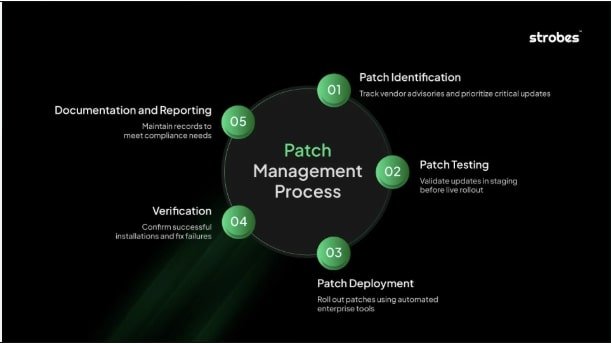
In today’s fast-moving threat landscape, patching can’t be treated like a routine chore—it needs to be a top-priority security practice. A single missed patch can turn a small vulnerability into a costly breach. Here’s how to make your patching process faster, smarter, and more effective:
1. Prioritize Patches by Risk
Not all vulnerabilities are created equal. Use CVSS (Common Vulnerability Scoring System) ratings to determine which flaws are most dangerous. Focus first on critical and high-severity issues—these are the gaps attackers are most likely to exploit.
2. Automate Vulnerability Scans
Don’t wait for the next audit to find weak spots. Continuous scanning detects vulnerabilities as soon as they appear, and automation ensures nothing slips through the cracks.
3. Use Centralized Patch Management Tools
Deploying patches manually across dozens or hundreds of devices is risky and slow. Centralized patch management platforms make it easy to push updates across your entire network, reduce human errors, and keep everyone on the same page.
4. Test Patches in a Safe Environment
Before rolling out a patch to all systems, test it in a controlled environment. This helps avoid compatibility issues, downtime, or unexpected disruptions in critical applications.
5. Establish a Rapid Patch Deployment Process
Create a clear, step-by-step framework that answers:
- Who approves patches?
- Who tests them?
- Who deploys them?
Having a structured process ensures patches are applied consistently and quickly, reducing the window of opportunity for attackers.
Moving Beyond Traditional Antivirus: The Rise of EDR Solutions
Traditional antivirus solutions rely on signature-based detection—they only recognize threats they’ve seen before. Modern attackers use sophisticated, fileless, and behavior-based tactics that slip past these outdated defenses.
This is where Endpoint Detection and Response (EDR) becomes essential.
EDR continuously monitors endpoints for suspicious activities such as unusual login patterns, privilege escalation, malicious scripts, or unauthorized lateral movement. Instead of waiting for known malware signatures, EDR analyzes behavioral indicators and reacts in real time.
Imagine it as a highly trained guard dog—alert, proactive, and capable of recognizing unfamiliar threats instantly, not just the ones it has seen before.
Organizations upgrading to EDR gain:
- Real-time threat detection
- Faster incident response
- Improved visibility across devices
- Reduced dwell time (the time attackers stay hidden)
Adopting EDR is now considered a baseline requirement for modern cybersecurity defense.
With a stronger foundation in patching and endpoint protection, the next major battleground is identity security—where attackers increasingly target weak logins and authentication gaps.
Navigating the New Realities of Identity and Access Management (IAM)
Identity remains the No.1 attack vector in 2025. Compromised credentials, weak passwords, and social engineering attacks continue to give cybercriminals an easy path into networks. To defend against modern threats, organizations must strengthen authentication beyond traditional passwords and adopt identity-first security practices.

Robust IAM is now a critical line of defense that protects systems, applications, and sensitive data.
The Evolution of Phishing: Beyond Simple Clickbait
Phishing has grown far more advanced than fake emails with suspicious links. Attackers now use multi-channel social engineering to trick users:
• Vishing (Voice Phishing)
Cybercriminals impersonate support agents, banks, or IT teams over the phone to collect verification codes or login credentials.
• Smishing (SMS Phishing)
Fraudulent text messages urge users to “verify your account,” “reset your password,” or “confirm suspicious activity.”
• MFA Fatigue Attacks
Attackers bombard a user with nonstop MFA prompts, hoping they’ll approve the request out of frustration or confusion.
Modern phishing exploits psychology, urgency, and trust—not just technology.
How to strengthen your human firewall:
- Conduct role-playing and simulation drills
- Teach users to identify unusual sender names
- Highlight the dangers of urgency-based manipulation
- Establish “pause and verify” culture before taking action
Training and awareness are essential, but they must be paired with stronger authentication controls.
Mandatory Adoption of Phishing-Resistant MFA
Why Critical Cybersecurity Updates Must Include Stronger MFA? Traditional 2FA methods like SMS codes or email-based OTPs are no longer secure. SIM-swapping, spoofing, and malware can easily intercept these codes. To stay protected, organizations need phishing-resistant MFA that cannot be tricked or copied.
Recommended Modern MFA Options
- FIDO2 Security Keys (YubiKey, Titan Key)
- Passkeys (biometric authentication)
- App-based authenticators with cryptographic verification
- Device-bound authentication that requires physical interaction
These methods ensure attackers cannot log in—even if they know your password. Security leaders worldwide strongly recommend upgrading to phishing-resistant MFA across all high-value accounts, admin portals, and cloud services.
Implementing this now eliminates the majority of credential-based attacks.
Embracing Least Privilege and Zero Trust Architecture (ZTA)
The Zero Trust model has become the gold standard for identity and access control. Instead of assuming internal users are trustworthy, Zero Trust works on a simple principle:
Never trust. Always verify.
Core Pillars of Zero Trust & Least Privilege
- Continuous authentication: Every access request is validated in real-time
- Least privilege access: Users only get the exact permissions required—nothing extra
- Micro-segmentation: Networks split into controlled segments to reduce lateral movement
- Device and identity validation: Access depends on user, device health, location, and behavior
By limiting privileges and validating every action, organizations drastically reduce the blast radius if an attacker compromises an account.
Zero Trust doesn’t just stop breaches—it slows attackers down so their presence can be detected and blocked quickly.
Strong, identity-centric security creates a powerful first barrier. But identity is only the beginning. The next major challenge is securing cloud environments, where misconfigurations and drift create hidden vulnerabilities.
Cloud Security Posture Management (CSPM) Failures and Configuration Drift
Cloud adoption continues to accelerate, but misconfigured services remain one of the leading causes of data leaks in 2025. As environments scale, small configuration errors—often overlooked—can expose sensitive data to the public internet.
Missteps like open storage buckets, overly permissive IAM roles, and unprotected ports create massive risks that attackers actively scan for.
In the cloud, one incorrect permission or overlooked setting can lead to immediate exposure. Detecting and correcting these issues quickly is essential to maintaining a secure cloud footprint.
Common Cloud Misconfigurations That Lead to Data Exposure
Even experienced teams make mistakes in fast-moving cloud environments. Some of the most common and dangerous misconfigurations include:
1. Publicly Accessible Storage Buckets
Unprotected S3 buckets, Azure Blob Storage, or Google Cloud Storage can leak customer data, internal documents, and proprietary code if left open to the public.
2. Overly Permissive IAM Roles
Loose AWS IAM policies or broad service roles allow unnecessary access—sometimes even full administrative control.
3. Misconfigured Security Groups & Firewall Rules
Open ports in AWS Security Groups or Azure Network Security Groups can expose vulnerable applications to brute-force attacks or remote exploitation.
4. Lack of Encryption at Rest or In Transit
Forgetting to enable encryption leaves sensitive data exposed to interception or unauthorized reading.
5. Inconsistent Resource Tagging & Governance
Without proper tagging, tracking critical assets becomes nearly impossible, increasing the chance of unnoticed drift.
Misconfigurations like these have led to major breaches and headline news, often caused by a single overlooked click. Continuous monitoring is the only reliable way to catch configuration drift before it results in a breach.
Automating Security Checks with CSPM Tools
Cloud environments are too dynamic for manual checks. That’s why Cloud Security Posture Management (CSPM) solutions are now essential.
CSPM tools:
- Continuously scan AWS, Azure, and GCP environments
- Detect misconfigurations and security gaps
- Compare settings against security frameworks (CIS, NIST, SOC 2)
- Provide auto-remediation for common risks
- Alert teams when drift occurs
By automating these tasks, CSPM reduces the time attackers have to exploit misconfigurations and ensures consistent compliance.
Tip: Begin with free assessments to identify weak points, then layer alerts and automated remediation for a stronger baseline.
Securing the Software Supply Chain in CI/CD Pipelines
Modern cloud infrastructure depends heavily on automation, containerization, and open-source libraries, but these introduce supply chain risks that attackers now actively target.
To secure your CI/CD pipelines:
Use Software Composition Analysis (SCA)
SCA tools scan third-party and open-source components for known vulnerabilities, malicious code, or outdated libraries.
Scan Containers and Images
Container image scanning detects malware, exposed secrets, or misconfigurations hidden inside container layers.
Validate Dependencies and Build Artifacts
Only use trusted sources and implement signature verification for packages and binaries.
Restrict Build and Deployment Permissions
Limit who—and what processes—can push changes into production.
When combined, these practices protect your entire development lifecycle from tampered code, dependency poisoning, or malicious packages.
With your cloud posture secured, the next step is understanding how evolving regulations and data sovereignty laws add new pressures and responsibilities for organizations worldwide.
Regulatory Compliance and Data Sovereignty Shifts

Global cybersecurity regulations are tightening rapidly, and organizations can no longer treat compliance as a checklist task. New laws now demand stronger security controls, faster reporting timelines, and stricter data-handling rules.
Failure to comply doesn’t just risk a warning—it can lead to massive financial penalties, legal consequences, and long-term reputational damage.
As governments strengthen data protection standards across regions, businesses must rethink how they store, manage, and secure sensitive information across borders.
The Rising Penalties for Non-Compliance
Regulatory bodies worldwide are escalating enforcement, and the price of non-compliance continues to soar.
Key developments:
- GDPR enhancements have increased scrutiny and can impose multi-million-euro fines for improper data handling or breaches.
- The NIS2 Directive in Europe now requires organizations to implement advanced security measures and report incidents within extremely tight timelines.
- New data protection laws across Asia, the Middle East, and North America impose stricter controls on breach notifications and cross-border data transfer.
Ignoring these regulations can lead to investigations, lawsuits, operational shutdowns, and severe financial losses. Staying compliant is not optional—it’s a survival requirement.
Data Mapping and Governance in a Borderless Cloud World
As data flows across SaaS platforms, cloud services, and globally distributed teams, understanding where your sensitive data resides is more important than ever.
To meet data sovereignty laws and minimize legal exposure:
Essential data mapping steps
- Identify and classify all sensitive data (PII, financial records, health data, trade secrets).
- Track the geographic location of every dataset to ensure compliance with regional storage requirements.
- Establish access policies aligned with local regulations (e.g., EU data must stay within EU regions).
- Use automated governance tools to monitor data movement and maintain clean, accurate inventories.
- Review and update data maps yearly or after major system changes to stay aligned with evolving laws.
Proper governance not only reduces risk—it strengthens customer trust and demonstrates organizational transparency.
Incident Response Planning Under New Mandates
Modern regulations now require organizations to report security incidents within hours, not days or weeks. This shift means incident response (IR) plans must be fast, structured, and well-practiced.
Key components of a compliant IR strategy
- Clear reporting workflows: Identify who is responsible for notifications, who contacts regulators, and who informs customers.
- Defined communication templates: Avoid delays when every minute counts.
- Frequent tabletop exercises & drills: Test detection, decision-making, and reporting speed under realistic conditions.
- Comprehensive logging & documentation: Maintain audit-proof evidence to support investigations and show regulatory compliance.
A strong IR plan transforms chaos into control, helping organizations act decisively when breaches occur.
Regulatory compliance now ties directly into operational resilience and brand trust. With these new legal pressures in place, the next challenge is preparing for the rising wave of advanced ransomware threats—and building layered defenses that can withstand them.
Resilience Against Ransomware 2.0 — Defense in Depth
Ransomware has evolved. Today’s strains don’t just encrypt files—they exfiltrate data first, then deliver the knockout punch. This “double-extortion” model demands multilayered defenses that can take a hit and keep your business standing.

Immutable Backups: Your Unbreakable Safety Net
When ransomware strikes, backups become your lifeline. But only immutable backups guarantee survival.
These backups are locked in read-only mode for a defined period—no edits, no deletes, no tampering, even if an attacker gets in.
Best practices:
- Follow the enhanced 3-2-1-1 rule: 3 copies, 2 media types, 1 off-site, 1 immutable copy
- Automate backup scheduling for consistency
- Perform routine restore tests—a backup you can’t recover is a backup you never had
- Use solutions with built-in ransomware anomaly detection for early warnings
Immutable backups ensure you can restore clean data instantly—turning a disaster into a manageable hiccup.
Network Segmentation to Stop Lateral Movement
Once hackers breach the perimeter, their next move is sideways—expanding access through lateral movement.
Network segmentation cuts off that escape route.
Key segmentation strategies:
- Split networks into logical zones (e.g., corporate IT, OT, factory floor, guest Wi-Fi)
- Use microsegmentation and zero-trust policies to limit internal access
- Implement next-gen firewalls to monitor cross-zone communication
- Deploy VLANs to isolate critical OT/ICS assets from risky IT systems
- Audit pathways attackers could exploit—privileged accounts, shared directories, legacy systems
Proper segmentation turns your network into a series of locked rooms, not an open floor plan—containing threats before they spread.
Proactive Threat Hunting Beats Reactive Cleanup
Waiting for an alert is outdated. Modern cybersecurity requires active threat hunting—searching for trouble before it blows up.
What proactive threat hunting includes:
- Daily scanning for unusual login patterns, strange file activity, and privilege misuse
- Identifying IOCs like suspicious IP traffic, unauthorized processes, or shadow admin accounts
- Leveraging AI-driven detection tools to surface hidden anomalies
- Empowering security teams with continuous training and red-team exercises
- Shifting your culture from “respond when notified” to “hunt until proven clean”
This mindset flips the script. Instead of reacting to chaos, you stop attacks mid-play, long before ransomware deploys its payload.
Conclusion: Building a Future-Proof Security Posture
Cyber threats aren’t slowing down—and neither can you. Today’s critical cybersecurity updates aren’t optional; they’re the backbone of a resilient, future-ready defense strategy. From sealing unpatched vulnerabilities to enforcing stronger logins, monitoring cloud drift, tightening compliance, and neutralizing modern ransomware—every update you apply closes another door hackers want open.
Start small, but start now. Pick one area today and take action.
Your immediate priority checklist:
- Deploy phishing-resistant MFA across all high-risk accounts—stop credential theft at the source.
- Automate cloud configuration checks with CSPM to prevent silent misconfigurations from becoming full-blown breaches.
- Validate the integrity and immutability of all critical backups so recovery is guaranteed when it matters most.
- Review your entire security stack this week and bring in expert support where needed.
Strong defenses don’t happen overnight—but every step you take reduces risk, builds resilience, and gives you something priceless: peace of mind in a world full of digital threats.
Cybersecurity Updates 2025 – Common Questions Answered
1. What is a zero-day exploit, and why is it so dangerous?
A zero-day exploit targets a software, hardware, or firmware vulnerability that is unknown to the vendor and for which no patch exists. Attackers exploit this flaw before developers can fix it, leaving systems highly vulnerable.
These exploits are dangerous because they operate undetected, can cause severe damage such as data theft or system disruption, and traditional defenses like antivirus are often ineffective against them due to their unknown nature.
2. What are the top 5 major threats to cybersecurity?
Zero-day exploits and unpatched vulnerabilities
Phishing and social engineering attacks
Ransomware, especially AI-enhanced variants
Cloud misconfigurations and supply chain attacks
Insider threats and compromised credentials
These threats exploit both technical weaknesses and human factors, causing major data breaches and financial losses.
3. How do I secure my software supply chain in a CI/CD pipeline?
Securing the software supply chain involves scanning all third-party libraries and open-source components for vulnerabilities using Software Composition Analysis (SCA) tools, validating the integrity of code and containers, implementing automated security checks at each CI/CD stage, and blocking deployment of untrusted or malicious code.
Regular audits and strict access controls within the pipeline further reduce risks.
4. What is the biggest weakness in cybersecurity?
The biggest cybersecurity weakness is human error. Attackers often exploit weak, reused, or stolen credentials, phishing attacks, and social engineering tactics to gain initial access. Even the strongest technical defenses can be bypassed if users are tricked or careless.
5. What is Cloud Security Posture Management (CSPM), and why is it critical?
CSPM is an automated toolset that continuously monitors cloud environments for security risks like misconfigurations, overly permissive access, and compliance violations. It is critical because cloud setups change dynamically, and unnoticed misconfigurations can lead to major data leaks or breaches. CSPM helps organizations maintain secure cloud configurations at scale.
6. What is phishing-resistant MFA, and how is it different from regular MFA?
Phishing-resistant MFA uses methods that cannot be easily intercepted or tricked by attackers, such as hardware security keys (FIDO2) or app-based authenticators that require device interaction (e.g., a fingerprint or button press).
Regular MFA methods like SMS codes are vulnerable to interception or SIM swapping attacks, making phishing-resistant MFA a stronger defense.
7. Which is better, AI or cybersecurity?
This is not a direct comparison but rather a complementary relationship. AI enhances cybersecurity by improving threat detection, automating responses, and predicting attack patterns. However, AI can also be used by attackers to craft sophisticated attacks.
Effective cybersecurity integrates AI tools responsibly while maintaining strong human oversight and traditional security practices.
About The Author
Follow Mamun Khan Rabbi in his Portfolio and get always more insights and so more.