
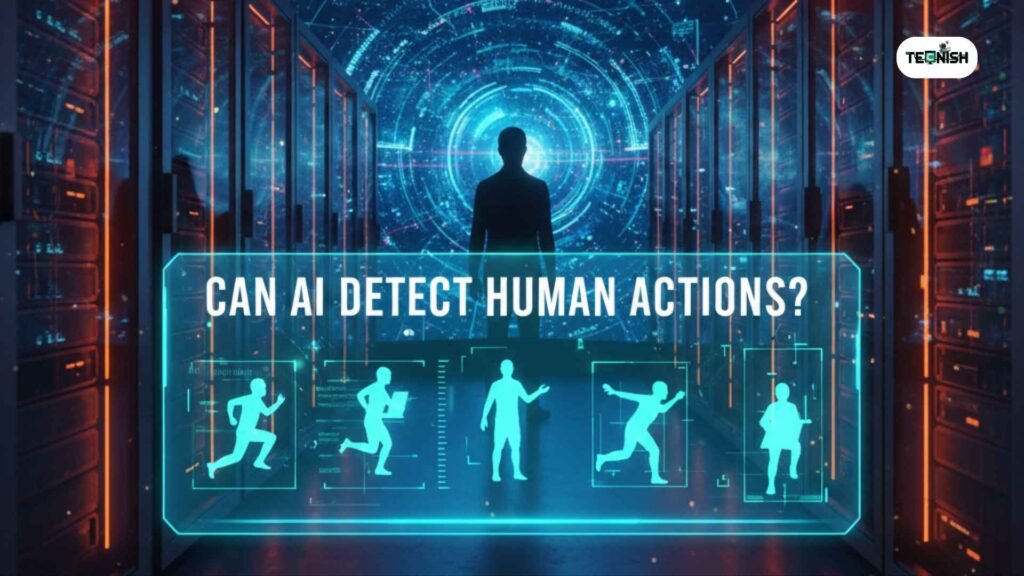

Have you ever imagined a world where machines understand human movements better than humans themselves? That world is closer than you think. With AI improving rapidly, action-detection systems can now recognize gestures, activities, and even accidents. According to recent tech reports, accuracy levels have jumped to over 90% in real-time action tracking. So when we ask, can AI detect human actions, the answer is a confident yes. This guide will break everything down in a fun, simple way. And if you love easy tech explainers, don’t forget to browse the Tecnish Tech Blogs page.
What Does It Mean for AI to Detect Human Actions?
Simple Definition for Beginners
Let’s make this easy. When someone asks can AI detect human actions, they’re really asking if computers can “watch” a person and understand what they’re doing. Think about how quickly your brain knows when your friend is running, waving, or sitting down. AI tries to copy that skill, except it uses math and patterns instead of feelings or instincts.
AI learns by watching tons of videos just like a kid who learns by observing cartoons. The more examples it sees, the better it becomes. This process is known as human action recognition, and it’s one reason why your phone can count your steps or why fitness apps know when you’re moving.
If you love reading cool tech explanations, you might enjoy the full collection on Tecnish too.
AI notices tiny details like how your arms swing when you walk or how your body bends when you sit. Many people ask can AI detect human actions, and this is how it works: it connects these clues and identifies the action. That’s how it works behind the scenes. Pretty cool, right?
Technical Meaning (For Curious Users)
Now here’s the slightly nerdier side but don’t worry, still in simple words. When experts talk about can AI detect human actions, they mean AI uses tools like computer vision for action recognition, math models, and pattern learning to study how humans move.
A video is actually made of thousands of pictures. AI scans each picture fast, looking for what changes. If arms rise, legs shift, or someone moves quickly, the AI tracks it. This whole method is called human activity recognition (HAR), and it’s used in hospitals, sports, robotics, smart cameras, and more.
AI learns through something called deep learning for action recognition, which is like stacking many mini-brains together. Each mini-brain learns one small part (shapes, patterns, motion), and together they understand full actions.
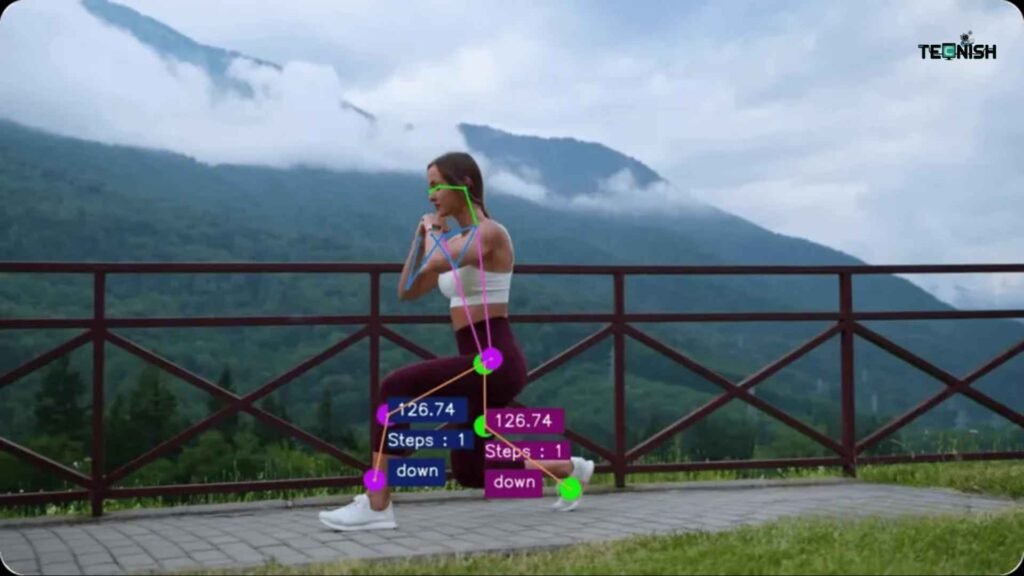
Sometimes AI even draws invisible stick figures on a person using pose estimation. This helps it know where elbows, shoulders, and knees are which makes action detection much sharper.
If you’d like to stay updated on future AI trends, check out articles like Micro LLMs in 2025 on Tecnish.
Real-World Examples of Action Detection
AI action detection is already everywhere around us. Your smartwatch counts your steps using motion tracking AI. Gaming systems read your hand movements using gesture recognition technology. Even apps like YouTube and TikTok use video content analysis to understand what’s happening in videos.
Security systems use AI to spot abnormal behavior detection, such as someone acting strangely in public places. Hospitals use sensors for sensor-based activity recognition to monitor patients safely.
Robots use these skills to work with humans safely something called human-robot interaction. And if you’re interested in how AI and robots work together, you can explore more in the AI & Robots category on Tecnish.
Tech news sites like Tecnish Tech News often feature breakthroughs like these, including updates on powerful models such as Google’s next-gen system in Gemini 3.0.
Real-world action detection is growing fast and becoming surprisingly reliable.
How Does AI Detect Human Actions?
Key Technologies Behind Action Recognition
To really understand how can AI detect human actions, it helps to know what tools are working behind the scenes. AI doesn’t magically “see” like humans do. Instead, it uses a mix of smart technologies that help it understand shapes, movement, and changes between frames. These tools work together like teammates in a game, each doing a small job so the final result is accurate.
These technologies power everything from fitness apps to security cameras. They are also used in many industries you read about in tech updates, like those featured on Tecnish Tech News. Let’s look at each tool in a simple, fun way.
Computer Vision
Think of computer vision as the “eyes” of AI. Just like you use your eyes to see what’s around you, AI uses computer vision to study images and videos. It looks for shapes, colors, outlines, and patterns.
When people wonder can AI detect human actions, this is how it works. If AI sees someone’s legs moving back and forth, computer vision helps it understand, “That looks like walking.” If it sees hands rising above the head, it notices, “That might be stretching.” This is the foundation for many modern technologies, including AI action detection used in smart cameras.t be stretching.” This is the foundation for many modern technologies, including AI action detection used in smart cameras.
Machine Learning & Deep Learning Models
Now imagine the “brain” behind AI’s eyes. This is where deep learning for action recognition comes in. These models study thousands of examples until they learn the difference between actions. It’s like teaching a kid to tell the difference between dancing and jumping by showing them lots of videos.
Tech companies build powerful models like this the kind you read about in articles such as Is ChatGPT Plus Worth It?. These models help AI understand actions faster and more accurately.
Human Pose Estimation
Pose estimation works like drawing stick figures on people. It finds your head, shoulders, arms, and legs, then connects those points. This helps AI understand exactly how your body is positioned. If your arms shoot up quickly, AI might think you’re waving. If you bend over, it might guess you’re picking something up.
Pose estimation is one of the most helpful tools for human behavior analysis, especially in fitness apps and robots.
Motion Tracking & Object Detection
This is how AI follows movement over time. With motion tracking AI, it can see how fast someone moves, how far they go, and what direction they’re heading. Meanwhile, object detection helps AI understand what things are around you like chairs, tables, or cars.
Combined, these help create real-time action detection, which is used in things like self-driving cars and smart security systems.
Step-By-Step Breakdown of the Detection Process
Let’s walk through how AI detects an action in the simplest way:
- AI sees the video or live feed.
This could come from a camera, sensor, or recorded video. - Computer vision finds the person in the scene.
It identifies where the body is. - Pose estimation draws the invisible stick figure.
This makes it easier to track joints and angles. - AI studies how the body moves frame by frame.
It watches changes in speed, position, and direction. - Deep learning models compare the movement to examples they learned earlier.
If it matches a known pattern, AI identifies the action. - AI makes a final guess.
It labels the action as walking, running, waving, falling, stretching, etc.
This is the magical moment where AI answers the big question: can AI detect human actions accurately? Most of the time, yes especially with today’s advanced models.
If you love learning how these tools shape the future, you might enjoy Tecnish’s deeper AI articles like Micro LLMs in 2025.
Where Is AI Action Detection Used Today? (Practical Uses)
Smart Surveillance & Security
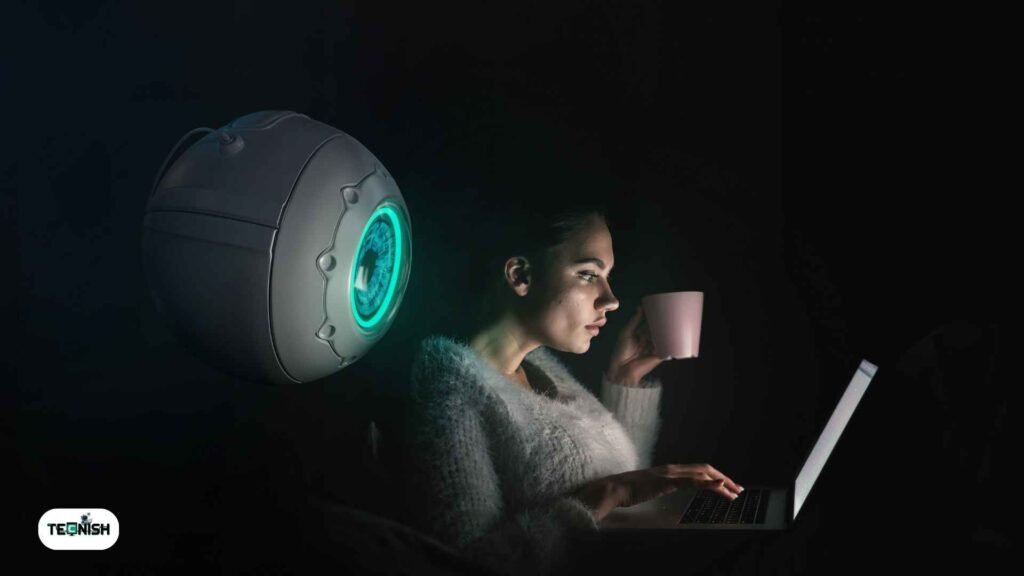
One of the biggest places where can AI detect human actions becomes super useful is in security. Modern cameras don’t just record; they think. They can spot someone running in a place where nobody normally runs, or someone acting strangely. This is where AI in surveillance and security shines. The AI watches movement patterns and alerts humans when something unusual happens. For example, if someone falls in a parking lot or enters a restricted area, AI can send a quick warning.
These smart systems help keep public places safer without needing dozens of security staff staring at screens all day. Action-detecting cameras use tools like abnormal behavior detection to notice things humans might miss. They’re also used in schools, malls, airports, hospitals, and even smart homes. Whenever news breaks about new AI tech helping cities stay safer, you can often read updates on the Tecnish Tech News page.
Self-Driving Cars
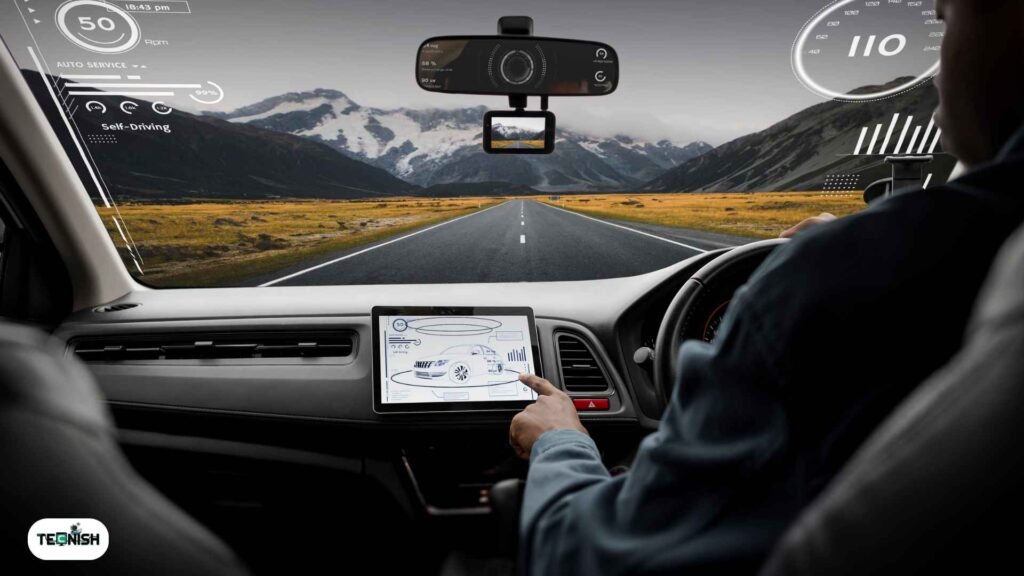
Self-driving cars are like giant robots on wheels, and they rely heavily on action detection. They constantly watch for people walking, biking, running, or crossing the road. AI must quickly understand human actions to avoid accidents. For example, if a pedestrian suddenly steps onto the road, the car uses real-time action detection to brake instantly.
These cars also study patterns so they can guess what a person might do next an early form of AI behavior prediction. This technology is improving fast as companies invest billions in AI research. If you follow big tech investments, you might enjoy related reads like Why Amazon Is Investing $11 Billion in Indiana.
Healthcare & Patient Monitoring

Hospitals use action detection to keep patients safe. For example, AI can alert nurses if a patient gets out of bed and risks falling. Sensors in rooms use sensor-based activity recognition to monitor movement without disturbing anyone’s privacy. These tools protect elderly patients, help doctors track recovery progress, and make hospitals smarter.
Even home-care systems use action detection, and many wonder can AI detect human actions to help keep older relatives safe. If someone collapses, the AI can notify emergency services instantly. This simple tech saves lives every day.
Fitness Apps & Movement Tracking
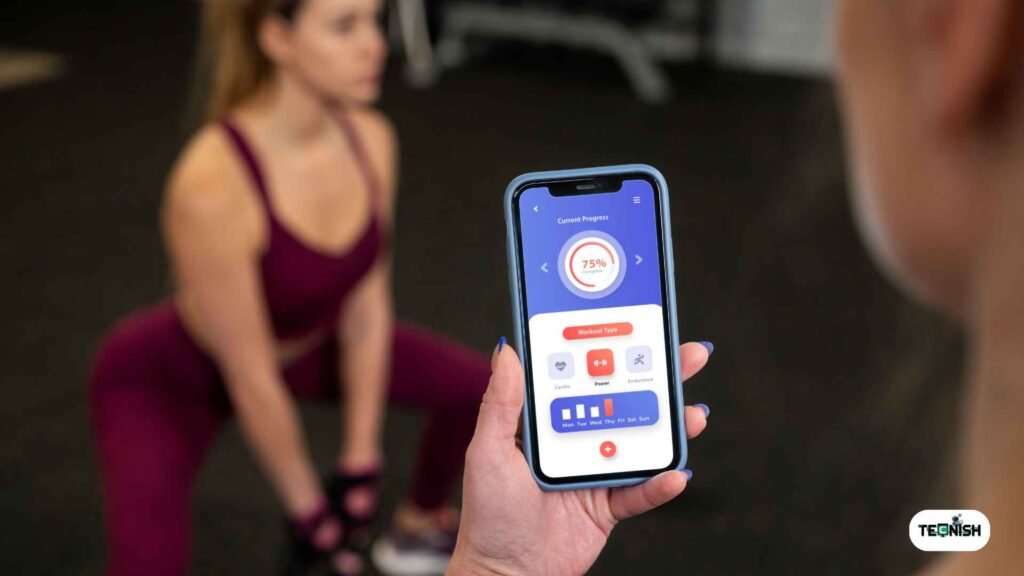
If your smartwatch knows when you’re walking, running, or working out, that’s all thanks to AI action detection. Fitness apps use motion tracking AI and sometimes even pose estimation to understand how your body moves. This helps them count reps, measure form, and even coach you on better workouts.
Many people learn about these innovations from friendly guides like the ones on Tecnish Tech Blogs, which explain fitness tech in easy language.
Robotics & Automation
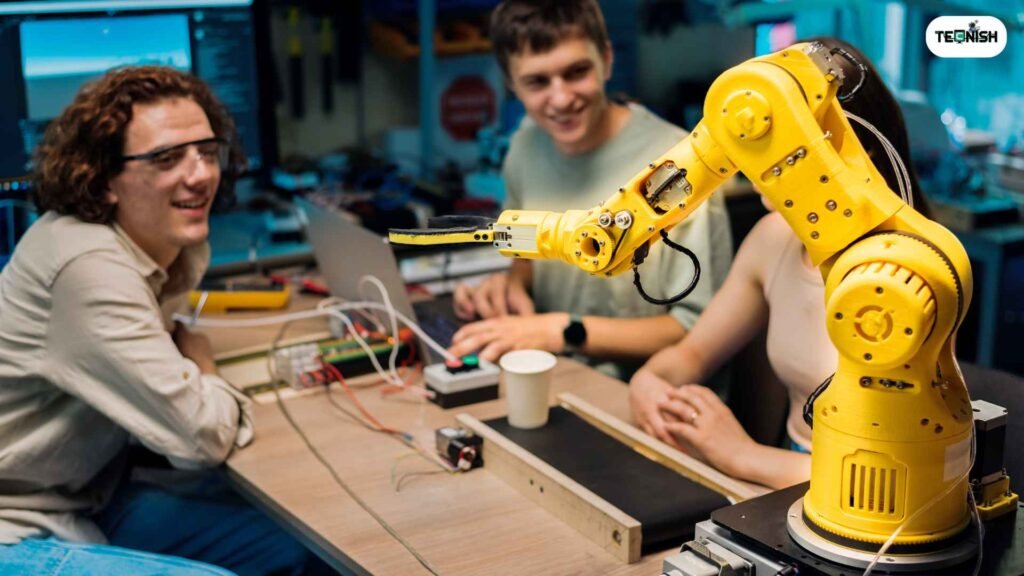
Robots must understand human actions to work safely around us. In factories, robots use action detection to avoid bumping into workers. This teamwork between humans and machines is called human-robot interaction. Robots “watch” people move and adjust their actions so everything stays safe and smooth.
Warehouses, delivery robots, and even cleaning robots use this technology. It helps them understand what humans are doing so they can work together without accidents.
Gaming, AR, and VR Systems
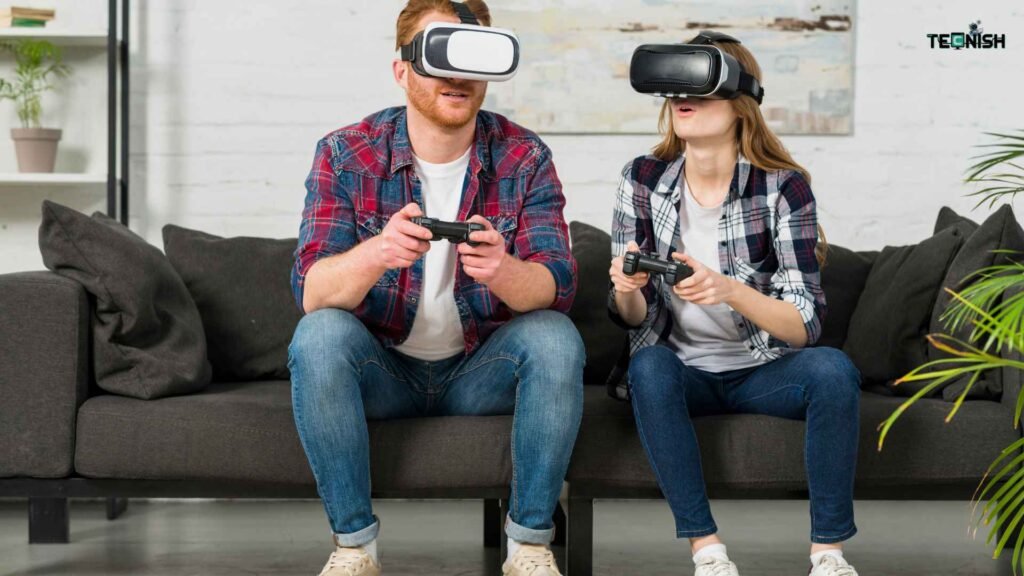
Big games, VR headsets, and AR apps use gesture recognition technology to understand your movements. When you swing your arm in a VR game, the system sees it and translates it into gameplay. When you wave your hand in front of a camera, the app reacts instantly.
This creates fun, immersive experiences that make games feel alive. New gaming tech often appears in industry updates like those in AI & Robots.
Can AI Detect Human Actions Accurately?
Accuracy Levels in 2025
Now let’s talk about how accurate AI really is. When people ask can AI detect human actions, the next question they usually wonder is, “Does it work well?” In 2025, the accuracy of action detection has become surprisingly high. Many systems can detect simple actions like walking, running, waving, or sitting with 90%–97% accuracy. More advanced systems the ones used in research labs or big tech can even reach higher accuracy when trained with tons of high-quality data.
But accuracy also depends on how complicated the action is. For example, detecting “jumping” is easy, but understanding something like “sneaking,” “panicking,” or “trying to grab something quickly” is more challenging.
This is where smart tools and methods help improve the accuracy of AI action detection. Deep learning, pose tracking, and motion analysis all work together to reduce errors. If you’re interested in learning how new AI updates boost accuracy, you might enjoy reading about emerging technologies like Google’s Gemini 3.0 on Tecnish.
Factors That Affect Accuracy
Even though AI is powerful, many still ask can AI detect human actions accurately. Several factors can make action detection harder, which means accuracy can drop.
Let’s look at the most common factors.
Low Light or Noisy Environments
If a room is dark or the camera quality is bad, AI struggles to see body shapes clearly. Just like humans have trouble seeing at night, AI also gets confused when the light is too low. Blurry or low-quality footage also hurts accuracy.
Occlusions (Objects Blocking View)
Occlusion simply means something is blocking part of the body. If a person stands behind a chair, table, or another person, the AI can’t see the full movement. This makes it harder to detect actions correctly. Even humans struggle with this.
Fast Motions & Complex Activities
Super-fast movements like throwing a ball or dodging something make people ask can AI detect human actions accurately, because the shapes change quickly. Complex actions like dancing or martial arts have lots of small moves, which makes correct detection harder.
Model Training Data Quality
AI learns from the examples it sees. If it is trained with poor-quality videos, strange angles, or limited people, its accuracy drops. Good training data is the secret behind the best future of human action detection models.
If you’re curious how AI training works behind the scenes, the Tecnish Tech Blogs page has easy-to-read guides on machine learning growth.
Common Mistakes AI Still Makes
Even with smart technology, AI still gets things wrong sometimes. For example:
- It may confuse walking with light jogging.
- It might think someone stretching is waving.
- It may misread a fast action as something completely different.
- It struggles when multiple people overlap in the video.
- It sometimes misjudges unusual actions it has never seen before.
TThese mistakes aren’t because AI is bad; it’s still learning, just like humans do. Over time, as researchers improve models and data, questions like can AI detect human actions are answered more confidently, and action detection becomes more accurate and reliable.
If you enjoy reading how AI models improve through upgrades and new releases, check out friendly articles like Is ChatGPT Plus Worth It? on Tecnish.
Can AI Detect Emotions, Intentions, or Future Actions?
Emotion Recognition
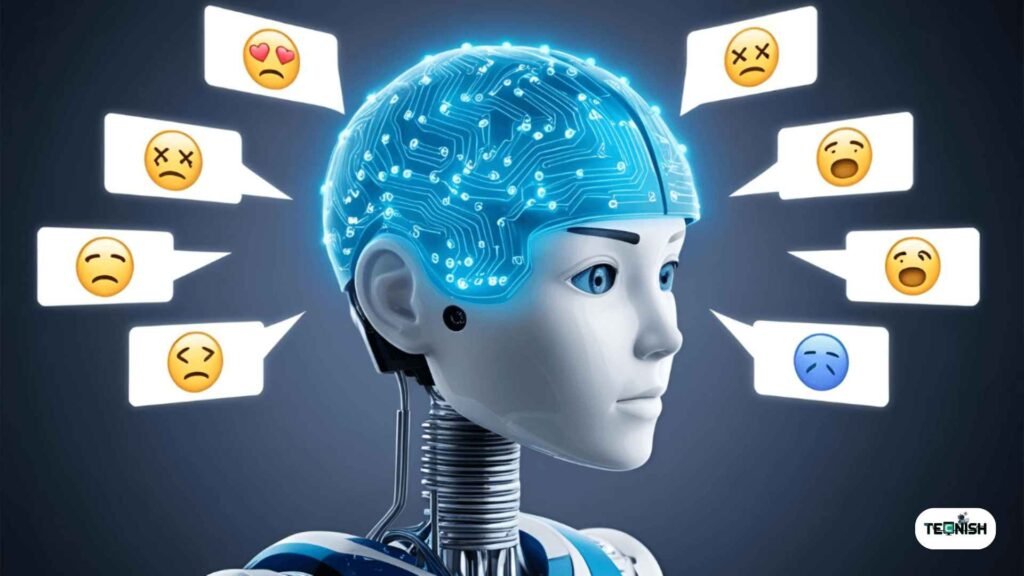
Now that we know can AI detect human actions, many people also wonder if AI can understand emotions too. And the answer is… kind of. AI can sometimes guess emotions like happiness, sadness, or anger by studying facial expressions, voice tones, and body posture. This process is often used in apps, customer service tools, and even mental health technology.
But here’s the truth: AI doesn’t “feel” anything. It looks for patterns smiling, frowning, eyebrows raised and guesses the emotion. While it can be helpful, it’s not perfect. Humans use instincts, memories, and heart. AI uses data and math. So emotion detection works, but it’s not as deep or accurate as real human understanding.
If you like exploring how AI connects with human feelings and behavior, the AI & Robots category on Tecnish has lots of fun reads.
Predicting Human Movements
This part is super interesting. Modern AI can sometimes guess what someone might do next by studying movement patterns. For example:
- If someone bends their knees, AI may predict a jump.
- If someone steps onto the road, AI may predict crossing.
- If a hand moves toward a door, AI predicts opening it.
This early prediction is called AI behavior prediction, and it’s very important in technologies like self-driving cars, security systems, and robotics. It helps machines prepare before actions happen just like your brain predicts when a ball is about to hit you.
Prediction systems keep getting smarter, especially as big tech companies develop more powerful models. News about these improvements often appears on Tecnish Tech News, where updates on the future of AI are explained simply.
Limitations & Ethical Boundaries
Even though AI can detect and predict actions, there are important limits. AI still struggles with:
- understanding complex emotions
- predicting unexpected human behavior
- reading intentions behind actions
- understanding cultural differences
- spotting actions in crowded or messy scenes
There’s also a big question around privacy concerns in AI surveillance. People don’t always want cameras tracking everything they do. This is why many countries create rules to protect people’s rights.
AI must be used responsibly. While questions like can AI detect human actions are important for safety, hospitals, or robots, it’s not okay to use it for spying or unfair monitoring. If you enjoy reading about the future of ethical AI, the Tecnish Tech Blogs section shares helpful guides that explain these topics simply.
Benefits of AI Action Detection
Increased Safety
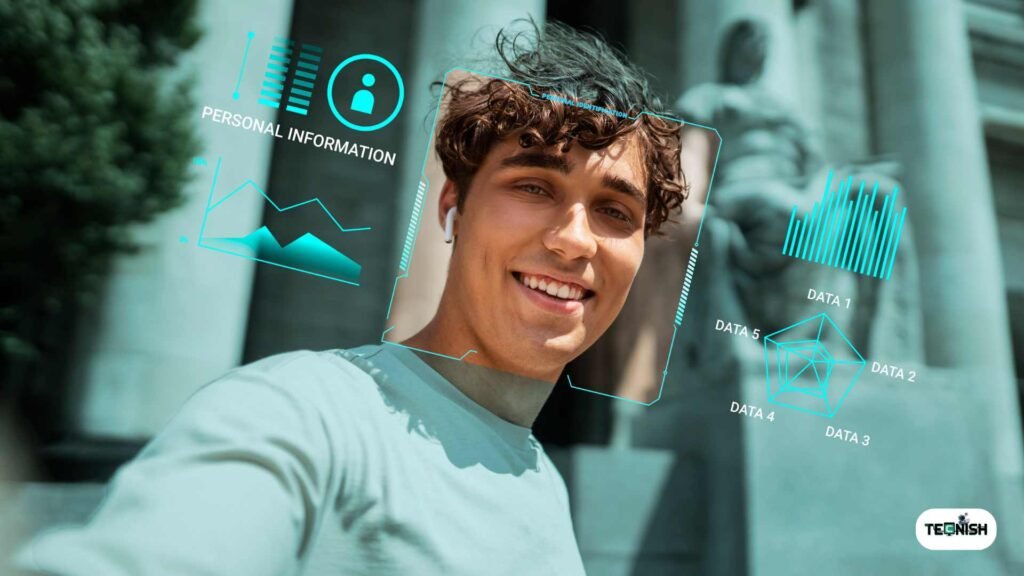
One of the biggest benefits of action detection is safety. Many ask can AI detect human actions, and the answer is yes AI can spot accidents, falls, dangerous movements, or unusual behavior faster than humans in many cases. This helps hospitals, schools, airports, factories, and homes stay safer.
Imagine a camera that warns a security guard instantly when something risky happens, or a hospital sensor that alerts a nurse when a patient tries to stand up. These life-saving moments show how important action detection is today.
Tech like this often makes headlines on websites like Tecnish, especially when companies launch smart safety tools.
Automation Opportunities
can AI detect human actions? Action detection also helps machines do work on their own. Robots in warehouses, farms, and factories use action detection to avoid accidents and support workers. When machines understand what people are doing, they can help instead of getting in the way.
This is one reason many companies invest heavily in AI research the same trend explained in articles like Why Amazon Is Investing $11 Billion in Indiana.
Enhanced User Experiences
If you love gaming, VR, fitness apps, or smart home devices, action detection is what makes them feel magical. When an app reacts instantly to your movement, or when a VR world changes as you move, that’s all thanks to AI recognizing actions.
This makes technology feel smoother, friendlier, and much more fun.
Cost Efficiency for Businesses
Businesses save money too. Instead of having staff watch cameras all day, AI watches automatically. Many companies now ask can AI detect human actions, and modern systems show that it can. Instead of needing expensive sensors everywhere, smart action detection can handle the job with fewer tools. This makes workplaces safer and more affordable at the same time.
If you enjoy reading how companies use AI to cut costs or grow quickly, articles like Micro LLMs in 2025 may interest you.
Challenges & Concerns With AI Watching Human Actions
Privacy Concerns
As helpful as action-detecting AI is, it also brings up an important concern: privacy. When people hear that AI can watch movements, track behavior, and understand actions, their first thought is often, “Is someone watching me all the time?” This is why privacy concerns in AI surveillance are such a big topic today.
Not all action detection is bad; most of it is used for safety, health, or convenience. But people still worry about cameras collecting too much information and ask can AI detect human actions responsibly. They wonder who controls the data, who sees the videos, and how long it gets stored. These concerns are real, and companies must follow strict rules to protect users.
You can read more in depth knowledge about Exploring privacy issues in the age of AI Here.
Bias in AI Models
Another challenge is bias. AI learns from data so if it’s trained with videos mostly showing certain types of people or behaviors, it might become less accurate for others. For example, if an AI is trained mostly on videos of adults, people may wonder can AI detect human actions accurately for kids or elderly people. If it’s trained on one country’s habits, it may misunderstand another country’s cultural movements.
These biases don’t come from AI being “bad.” They come from limited training data. Engineers are working hard to fix this, but it’s still something to watch closely. Quality datasets matter a lot for building a fair, reliable action-detecting system.
Misuse in Surveillance
While AI can increase safety, many ask can AI detect human actions and how it might be used responsibly. It can also be misused if someone uses action-detecting cameras to spy on people or collect data without permission, that becomes a serious problem. Some governments or companies might use it in ways that feel too controlling.
This is why we need clear rules and transparent use, so AI helps people instead of invading their personal lives. Questions like can AI detect human actions ethically must guide its development. Technology should feel like a helpful friend, not a strict monitor. Good companies understand this and follow global safety standards.
You can keep up with how AI is used in real life through the Tecnish Tech News page, which covers new AI regulations and industry updates.
Regulatory and Ethical Considerations
AI action detection is powerful, and powerful tools need responsible rules. Countries today are creating guidelines to make sure AI is used fairly, safely, and respectfully. This includes requiring:
- clear permission before collecting video data
- transparent use cases
- safety checks for accuracy
- strong cybersecurity
- fair, unbiased AI training
Ethical AI means using technology to protect people, not control them. As questions like can AI detect human actions become more common, it’s important that these systems help hospitals, schools, and robots without spying or invading privacy. The future of action detection will depend heavily on good rules and smart decisions.
If you enjoy understanding how future tech is guided by laws and ethics, the AI & Robots category on Tecnish covers these topics in simple, friendly language.
Future of AI in Human Action Detection
Smarter Movement Understanding
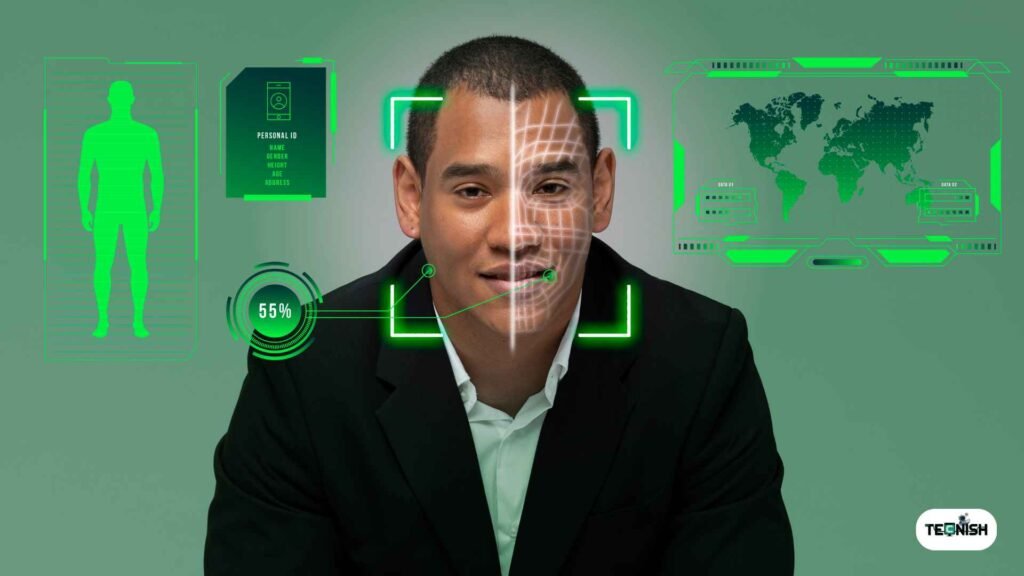
The future of action detection is very exciting. Many people ask can AI detect human actions beyond simple movements, and the answer is yes it’s learning not just to see simple actions like running or jumping but also to understand complex movements. Soon, AI may recognize teamwork, routines, or even unique personal habits.
This growth in intelligence is part of the broader future of human action detection, where AI understands movement the same way humans do with context, meaning, and clarity. As models become smarter, they’ll help doctors, teachers, coaches, and everyday people.
Real-Time Action Predictions
Soon, AI won’t just detect what you are doing it will predict what you might do next. Imagine:
- a self-driving car predicting that someone is about to run across the street
- a fitness app predicting your next workout movement
- a robot predicting when you’ll reach for a tool
Predictive systems will reduce accidents, improve safety, and make machines work more naturally around humans.
If you like reading about cutting-edge AI, check out articles like Google’s Gemini 3.0 on Tecnish.
More Human-Like Perception
Future AI won’t just see shapes; it will understand body language and smooth transitions. As researchers explore can AI detect human actions more precisely, it will analyze rhythm, style, and personal differences. This makes it better at understanding unique actions for sports, medicine, and robotics.
As robots move into more jobs, this human-like perception becomes extremely important and exciting!
Integration with IoT, AR, and Robotics
Imagine your smart home detecting if you slip. Or AR glasses changing screens based on your hand movement. Or robots understanding gestures instantly. This is the future: a connected world where many ask can AI detect human actions and see them in real time, with AI action detection working with everything. IoT devices (like sensors, smart lights, watches, cameras) will partner with action-detecting AI to create safer and smarter environments.
Tech lovers can explore how these integrations work on the Tecnish homepage, where you’ll find beginner-friendly guides for all kinds of new innovations.
Frequently Asked Questions (AEO-Optimized)
- Can AI detect what a human is doing in real time?
Yes! Modern AI can detect actions in the exact moment they happen. Thanks to tools like pose tracking, motion analysis, and smart deep learning, AI can spot movements such as walking, waving, running, falling, and more in real time. This is super useful in self-driving cars, gaming, and smart security systems.
- Can AI detect illegal or dangerous actions?
AI can detect actions that look dangerous, such as fighting, falling, trespassing, or unusual movements. It uses patterns to identify risks. But remember AI only detects motion; it doesn’t know full context. That’s why humans still make the final decisions in safety systems.
- Can AI track human actions without a camera?
Yes, but only in some cases. With tools like sensors, smartwatches, pressure pads, or phone motion chips, AI can track body movements without using video. This is part of sensor-based activity recognition, often used in fitness trackers and smart home devices.
- Is AI better than humans at detecting actions?
For simple movements like walking or running, many ask can AI detect human actions, and it can often be faster and more consistent than humans. It never gets tired. But humans are still better at understanding emotions, intentions, and context. AI is helpful, but it’s not smarter than people it just processes data quickly.
- Do smartphones already have action detection features?
Yes! Your phone already uses action detection every day. Step counters, fitness apps, fall detection, gesture control, and even camera effects work because your device understands your movement. This technology will only get smarter in the coming years.
Wrapping up: Is AI Really Able to Detect Human Actions Today?
So, after exploring everything, we can confidently say can AI detect human actions absolutely yes. And it’s not just a tech trend; it’s a huge part of our daily lives. AI watches movements to keep us safe, help us exercise, support elderly care, power robots, and even make games more fun. It’s like having a smart assistant that understands body language.
While AI still has limits like privacy concerns, tricky lighting, or complex emotions it keeps improving amazingly fast. Companies everywhere are building smarter models, and the future of this technology looks bright. It will help cities, homes, hospitals, schools, and workplaces in ways we’re only beginning to imagine.
If you like this article can AI detect human actions guide helpful the don’t forget to leave a comment or want to keep learning about AI, tech news, and future trends, explore more easy-to-read guides on Tecnish, Tech Blogs, and AI & Robots pages. You’ll always find something interesting there!