
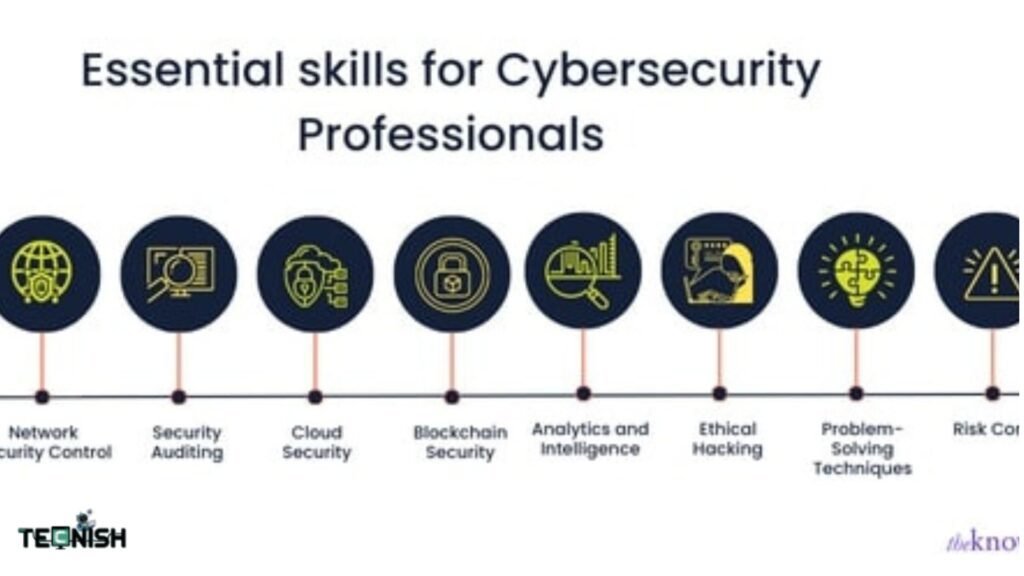

A Quick Overview
The cybersecurity field is booming That’s why some Essential Skills for Cybersecurity Professionals is matters in 2025 edition. Global cybercrime damages are projected to reach $10.5 trillion annually by 2025 slu.edu, and companies worldwide are scrambling to hire talented defenders. As threats evolve, demand for skilled cyber professionals has surged slu.edu.
Entry-level analysts can command six-figure salaries, and spending on security is expected to exceed $212 billion by 2025 nucamp.co.
Yet a massive talent gap looms – analysts estimate 3.5 million cybersecurity jobs may go unfilled by 2025 nucamp.coslu.edu. In this competitive landscape, possessing the right mix of technical, analytical and soft skills is critical.
In this article we review the essential skills hiring managers will look for in 2025 – from coding and networking to compliance and teamwork – to help you stay ahead in your cybersecurity career.
👉 Learn more in our detailed guide: Does Cybersecurity Require Coding?
Why Skills Matter in Cybersecurity Careers
Cybersecurity is no longer an obscure niche – it’s business-critical. Employers increasingly prioritize hands-on skills over formal degrees. For example, ISC²’s CISO removed college-degree requirements from his team, noting “a degree is an indicator, but it is not the only indicator and, arguably, it is not the best indicator” csoonline.com.
Organizations are shifting to a skills-first hiring approach, valuing applicants who can demonstrate problem-solving, communication and technical talent over simply having a degree csoonline.com.
The talent shortage is dire: according to recent studies, nearly half of companies report cybersecurity hiring delays, and budget cuts have exacerbated skill gaps ibm.com.
In 2023–2024, many firms faced layoffs and 37% experienced budget cuts, which ironically made finding qualified staff even harder ibm.com. As ISC²’s CISO notes, “there just aren’t enough existing cybersecurity professionals” to fill open roles csoonline.com.
This global shortage – along with evolving threats – means employers will pay premiums for candidates who show mastery of core skills. Staying current with in-demand proficiencies is therefore crucial for anyone pursuing a cyber career.
Core Technical Skills
Cybersecurity professionals need a broad technical toolkit. Key technical skills include:
Coding & Scripting (Python, Bash, PowerShell):
- Modern security work often involves automation and custom tools. As one Penetration Tester job description puts it, candidates must have “Proficiency in Python, JavaScript, or Bash/PowerShell for exploit development and automation” justjoin.it.
Even blue-team roles rely on code: HackTheBox notes that SOC analysts use programming (especially Python) to parse logs, automate alerts and build monitoring tools hackthebox.com.
Learning Python and shell scripting (Bash/PowerShell) is especially valuable for tasks like log analysis, IDS/IPS rule-writing and malware analysis.
Networking & Protocols (TCP/IP, DNS, VPN, OSI):
- A deep understanding of networking fundamentals is essential. Cyber pros must know how the OSI model and TCP/IP stacks work, how DNS can be exploited, and how VPNs and firewalls operate. For example, a Network Security Analyst needs to grasp packet flows, routing,
and protocols in order to detect anomalies or secure a network. Mastery of tools like Wireshark and knowledge of protocols (HTTP, TLS, SMTP, etc.) helps professionals identify threats and harden infrastructure.
Operating Systems (Linux, Windows, macOS):
- Cybersecurity experts should be comfortable in multiple OS environments. Linux skills (command line, permissions, SysAdmin) are indispensable for server and cloud security, while Windows expertise (Active Directory, PowerShell, Windows Server) is critical for enterprise environments.
In practice, knowing how to configure security settings, manage logs, and deploy security tools on each OS is a must. Virtualization (VMware, Hyper-V, KVM) and container awareness also fall under OS skills, as many networks use VMs and Docker.
Security Tools & Frameworks:
- Familiarity with standard security products and frameworks is expected. For example, proficiency with SIEMs (like Splunk or Elasticsearch), IDS/IPS (Snort, Suricata), endpoint protection (EDR), and vulnerability scanners is crucial for SOC and IR roles.
Likewise, knowing security frameworks like the NIST Cybersecurity Framework (CSF) or ISO/IEC 27001 helps structure an organization’s defenses. In web and application security, the OWASP Top 10 is the de facto guideline – it “represents a broad consensus about the most critical security risks to web applications” owasp.org.
Threat modeling frameworks such as MITRE ATT&CK are also key: MITRE ATT&CK is a “globally-accessible knowledge base of adversary tactics and techniques” that many analysts use to anticipate attacker behaviors attack.mitre.org.
Learning these frameworks and tools (SIEM, EDR, SIEM, SAST/DAST scanners, etc.) is a core part of on-the-job skill building.
Cloud Security (AWS, Azure, GCP):
- As organizations move workloads to the cloud, cloud security skills are in very high demand. Hiring managers consistently list cloud security as a top skill requirement ibm.com.
Cyber professionals must understand security concepts for services like AWS (IAM roles, VPC configuration, KMS encryption), Azure (Azure AD, security center, Sentinel SIEM), and Google Cloud (IAM, Cloud Audit Logs).
Knowledge of container security (Kubernetes) and DevSecOps pipelines (CI/CD tools, IaC security) is also increasingly important. Certifications like AWS Certified Security Specialty or Microsoft’s SC-200 can be valuable for this domain.
Cryptography (Encryption, PKI, TLS):
- A solid grasp of cryptography fundamentals is essential. Professionals should understand symmetric and asymmetric encryption, public key infrastructure (PKI), and protocols like TLS/SSL.
Skills include configuring secure communications (HTTPS, SSH), managing certificates, and applying encryption to data-at-rest (disk encryption, encrypted databases). Familiarity with libraries and tools (OpenSSL) and standards (FIPS, NIST crypto recommendations) is expected.
Penetration Testing & Ethical Hacking:
- Offensive security skills help defenders think like attackers. Pen testers need to be adept at using tools like Metasploit, Burp Suite, SQLmap, and fuzzers, and writing custom exploit scripts.
As one senior tester role noted, being able to “create custom proofs-of-concept instead of relying solely on scanners” is a big plus justjoin.it. Knowledge of OWASP Top 10 vulnerabilities and CVE databases, as well as hands-on labs (Metasploit, Hack The Box, CTFs), builds practical hacking skills. Certifications like OSCP/OSCE or CEH often demonstrate these capabilities.
Digital Forensics & Incident Response:
- Forensic and IR skills are critical for investigating breaches. This includes acquiring and analyzing disk images, memory dumps, and logs to trace an attacker’s actions.
Familiarity with EDR tools, SIEM alert triage, and malware analysis (static/dynamic) is important. Many studies list incident response and forensics among the top sought-after skills slu.eduibm.com.
Virtualization & Container Security:
- Virtual machines and containers are ubiquitous, so understanding their security is key. This involves securing hypervisors, isolating VMs, and hardening container orchestration (Docker, Kubernetes). Skills include managing images, implementing container runtime security, and applying network segmentation in virtual environments.
Threat Intelligence & Vulnerability Management:
- Cyber professionals should know how to gather and use threat intelligence. This means monitoring open-source intelligence (OSINT), subscribing to feeds (like malware signatures), and mapping threats using frameworks (e.g., MITRE ATT&CK).
In tandem, vulnerability management skills – scanning systems, assessing risk, and coordinating patching – are vital. A proactive security program often relies on up-to-date threat data and vulnerability reports.
Identity & Access Management (IAM/PAM):
- Managing user access is foundational to security. Skills include configuring IAM in cloud and on-prem (roles, policies, SSO), implementing multi-factor authentication (MFA), and understanding identity providers (SAML, OAuth). Privileged Access Management (PAM) tools (like CyberArk) are also part of this domain. Knowing how to audit and tighten user permissions helps prevent breaches.
Zero Trust Architecture:
- The Zero Trust model – never trust, always verify – is a major trend. Cyber pros should understand its principles (micro-segmentation, continuous authentication) and relevant technologies.
Zero Trust is frequently cited as a top skill area ibm.com, and NIST has published guidelines (SP 800-207) to implement it. Organizations are moving toward Zero Trust networks, so familiarity with this paradigm (and tools like software-defined perimeters) will be important.
IoT & OT Security:
- As Internet of Things (IoT) and Operational Technology (OT) devices proliferate in industries, securing them is becoming crucial.
Cybersecurity for IoT/OT involves protecting SCADA systems, industrial controls, and embedded devices. Analysts note that “as industrial systems become more connected and intelligent, the attack surface…has dramatically expanded” nomios.com.
Skills in securing sensors, PLCs, industrial networks (ICS/SCADA), and understanding protocols like Modbus or DNP3 are needed in sectors like energy, manufacturing and critical infrastructure. With new regulations like the EU’s NIS2, OT/IoT security expertise is a growing priority nomios.com.
Analytical & Problem-Solving Skills

Beyond technology, analytical thinking is a must. Cybersecurity often involves detective work: analyzing logs, spotting anomalies, and hypothesizing attacker behavior. Employers seek candidates who can reason through complex problems and break them into solvable parts.
For instance, ISC² reports that “strong problem-solving skills” are among the top non-technical attributes sought in cyber professionals ibm.com.
Working through multi-stage attacks, performing root-cause analysis after incidents, and handling incident response scenarios all require analytical rigor.
Cultivating a curious, investigative mindset helps you identify hidden vulnerabilities and triage incidents effectively.
Essential Soft Skills in Cybersecurity
Technical chops aren’t enough on their own. Soft skills often make or break a career in cybersecurity. Communicating clearly – both verbally and in writing – is vital when explaining threats or drafting incident reports.
The same ISC² study found that “strong communication skills” were rated as the #1 in-demand skill across all cyber roles ibm.com.
Teamwork and collaboration are equally important: security teams must work closely with IT, developers, compliance, and management. Adaptability and continuous learning are also key, as tools and threats constantly change.
As CISOs emphasize, they value candidates who demonstrate curiosity and a willingness to learn csoonline.com. Critical thinking, attention to detail, and the ability to handle pressure (e.g. during a live incident) round out the soft skills needed.
In short, employers look for well-rounded professionals: technical expertise plus communication, teamwork, and problem-solving abilities ibm.comcsoonline.com.
👉 Discover more insights here: Does Cybersecurity Require Coding in 2025?
Business & Compliance Knowledge

Cybersecurity doesn’t exist in a vacuum – it’s tied to business and regulations. Professionals should understand the business impact of cyber risks (e.g. financial, reputational) and how security aligns with organizational goals. Familiarity with compliance and privacy laws is often required.
For example, European GDPR, U.S. HIPAA (for healthcare), and PCI-DSS (for payments) set mandatory security standards.
Standards like ISO/IEC 27001 and frameworks like NIST CSF are widely adopted: knowledge of them shows you can map security controls to business needs bitsight.com.
The EU’s NIS2 directive, in particular, will force more companies (in critical sectors) to implement strict cybersecurity measures and incident reporting nomios.com. Companies also expect understanding of risk management and audit processes.
You may be asked to help conduct risk assessments, prepare for security audits, or draft business continuity plans (BCP) to ensure operations survive attacks. In sum, cyber pros should speak the language of business and compliance – knowing why security matters in legal and financial terms, not just technical terms bitsight.comnomios.com.
Cybersecurity Job Roles & Required Skills
Different careers emphasize different skill mixes. Below are some common roles and the skills they typically require:
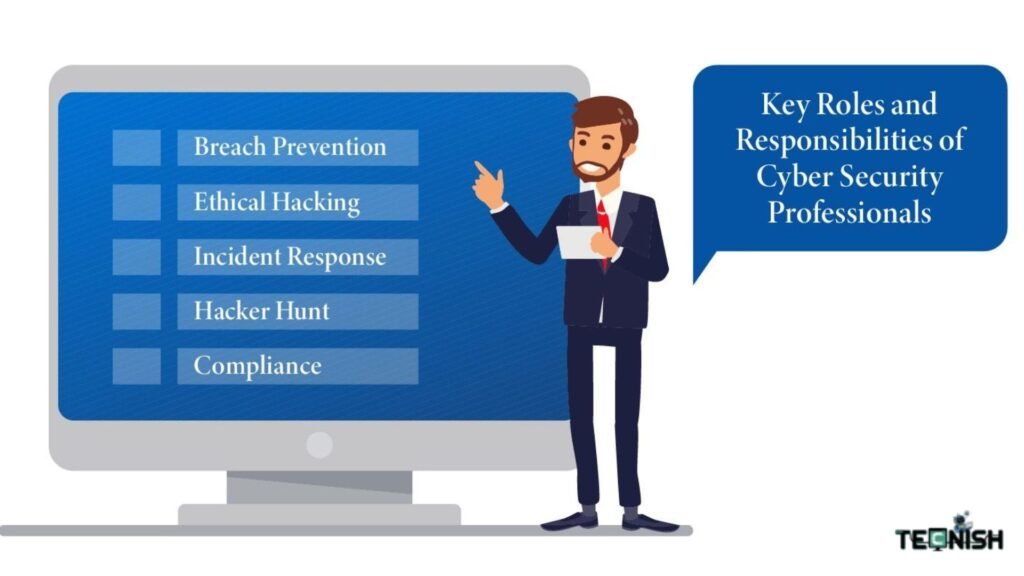
SOC Analyst (Security Operations Center):
A SOC Analyst monitors and analyzes security alerts around the clock. They use SIEM tools, investigate suspicious activity, and escalate incidents. Key skills include log analysis, IDS/IPS configuration, incident response procedures, and knowledge of malware behaviors.
As one resource explains, SOC analysts “constantly monitor an organization’s systems for suspicious activity or breaches. They investigate anything suspicious to understand whether it’s a real threat” hackthebox.com.
Practical skills include using Splunk or QRadar, running packet captures, and triaging incidents. Entry-level SOC roles often require CompTIA Security+ or similar certs.
Security Architect:
Security Architects design the overall security infrastructure for an organization. They need a deep understanding of networks, cloud, and systems to build secure architectures.
Skills include network design, encryption schemes, firewall and VPN configuration, and compliance. Familiarity with enterprise frameworks (NIST/ISO) is important,
as is the ability to assess risk and propose security controls. Architects often write policies and work with stakeholders to ensure security is built into projects from the start.
Penetration Tester (Ethical Hacker):
Penetration Testers actively try to break into systems to find vulnerabilities. They require strong programming/scripting skills, as well as expertise in web, network, and wireless hacking techniques. Certifications like OSCP or CEH are common.
On the job, pentesters use tools like Burp Suite, Nmap, Metasploit, and custom scripts. They produce reports with exploit proof-of-concept (PoCs) and remediation suggestions.
For example, one senior pent ester role notes that proficiency in Python, JavaScript or Bash/PowerShell is essential for exploit development and automation justjoin.it.
Threat Intelligence Analyst:
This role focuses on gathering and analyzing data about emerging threats. Key skills include open-source intelligence (OSINT) gathering, reverse-engineering malware indicators, and understanding attacker motives.
Threat analysts often map their findings to frameworks like MITRE ATT&CK to track adversary tactics. Knowledge of geopolitics or specific industry threats can also be important. Strong analytical skills and familiarity with intelligence tools/platforms are required.
AI/ML Security Specialist:
With AI on the rise, specialists who understand how to secure machine learning models are emerging. Skills include knowledge of adversarial machine learning (how attackers can trick models), securing AI development pipelines, and using AI to enhance security (e.g. anomaly detection).
Employers value experience with data science and security – for instance, the ISC² study found AI and cloud skills have jumped to the top of needed expertiseibm.com. Certifications or courses in AI security can set candidates apart.
Cloud Security Engineer:
Focused on securing cloud platforms, these professionals need in-depth knowledge of public cloud offerings. They configure secure VPCs, implement IAM policies, encrypt cloud storage, and design secure cloud architectures.
Hands-on experience with AWS/Azure/GCP security services and compliance in the cloud is crucial. Often these roles expect cloud certs like AWS Certified Security Specialty or (ISC)² CCSP.
Others:
Fast-growing roles also include DevSecOps Engineer (blending development, operations and security), Security Consultant, and Privacy Officer.
For instance, the BLS projects that “information security analyst” jobs will grow 32% through 2032 (far faster than average) slu.edu, and demand for cloud/IoT/AI-related roles is skyrocketing. Whether in a SOC, on a blue/red team, or in an executive position (CISO), aligning your skillset to the role’s needs is essential.
Learning Roadmap For 2025 Edition
Breaking into cybersecurity or advancing requires continuous learning. Here are some recommended resources and steps:
Free Learning:
- Platforms like TryHackMe and Hack The Box offer hands-on labs in penetration testing and forensics. Cybrary and Pluralsight host free courses on many cyber topics. The OWASP site (OWASP.org) provides tutorials on web security (e.g. Top 10). Also follow blogs and podcasts (SANS, Dark Reading, Krebs On Security) to stay current.
Paid Training & Online Courses:
- SANS Institute courses and GIAC certifications (e.g. GSEC, GCIH) are well-respected. Coursera and Udemy have cybersecurity tracks (often in partnership with universities or companies). Bootcamps can be fast-paced options for beginners.
Certifications
- Industry certifications validate your skills. For beginners, CompTIA Security+ is often recommended as it covers fundamental security concepts comptia.org. For hands-on pretesting, OSCP (Offensive Security) or CEH (Ethical Hacker) are valuable.
For mid-level or management roles, CISSP (Certified Information Systems Security Professional) is widely recognized; (ISC)² calls CISSP the “world’s premier cybersecurity certification” isc2.org.
Other popular certs include CCNA Security/DevNet (Cisco), Certified Cloud Security Professional (CCSP), and sector-specific ones like CISM, CISA for audit or HCISPP for healthcare.
Hands-On Practice:
- Build a lab at home with virtual machines. Participate in Capture The Flag (CTF) competitions to hone hacking skills. Contribute to open-source security projects or bug bounty programs. Practical experience is often the best teacher and is highly prized by employers.
Combining study with practice will reinforce your knowledge. Earn credentials that align with your target role, and be active on forums (Reddit r/cybersecurity, Stack Exchange) to ask questions and share knowledge.
Future Supper Powerful Skills
Looking ahead, several trends will shape cybersecurity skills:
AI and Automation:
- As cyber attacks leverage AI, defenders must also use AI/ML tools. Skills in applying machine learning to threat detection (and understanding the risks of AI-generated attacks) will be crucial.
The ISC² survey noted that artificial intelligence skills have jumped into the top 5 list of cybersecurity skills due to their growing importance ibm.com.
Automation & DevSecOps:
- Automating security (via Infrastructure-as-Code tools like Terraform, or security orchestration tools) is increasingly important. Security pros will need to work closely with DevOps teams, integrating security checks into CI/CD pipelines.
Zero Trust:
- Zero Trust architecture, which requires continuous verification of users and devices, will continue to be a focus. Mastery of Zero Trust principles and solutions (micro-segmentation, identity-based access) will be in demand.
Quantum-Safe Cryptography:
- Quantum computers, once they mature, could break today’s encryption. Security teams are already planning for post-quantum cryptography (PQC). As Microsoft notes, “Quantum computing…poses a real risk to today’s cryptographic security” and organizations must migrate to quantum-resistant algorithms microsoft.com. In the future, knowledge of PQC standards and crypto-agility will be valuable.
OT/IoT Security:
- Protecting Industrial Control Systems and the Internet of Things will grow in priority. As more devices come online (smart cities, manufacturing sensors), securing those networks requires specialized skills. Preparing for new regulatory mandates (like NIS2) in critical infrastructure will also be key.
Privacy Engineering:
- Data privacy is becoming integral. Skills in privacy-by-design, anonymization techniques, and understanding evolving privacy laws (beyond GDPR, such as U.S. state laws) will become part of the cybersecurity domain.
Staying aware of emerging technologies and threat landscapes – and continuously updating your skillset – is the only way to remain effective in this rapidly changing field.
Conclusion for Cybersecurity Professionals
In summary, success in cybersecurity in 2025 will hinge on a well-rounded skillset. Technical expertise (coding, networking, cloud, etc.) must be paired with analytical acumen and strong soft skills like communication and teamwork ibm.comcsoonline.com.
Business and compliance savvy will keep you aligned with organizational needs. Start building these capabilities now – through study,
certifications and hands-on practice – to stay competitive as the field continues to grow. For instance, learning to code (especially Python and scripting) is a clear advantage in many roles justjoin.ithackthebox.com.
Focus on continuous learning: our existing guides on coding and security (link to related articles) can help you get started. By developing these essential skills and earning recognized credentials, you’ll be well-positioned to thrive in the cybersecurity careers of tomorrow comptia.orgisc2.org.
FAQs About cybersecurity in 2025
1. What are the essential skills for cybersecurity in 2025?
A mix of technical and non-technical skills. Key technical skills include coding/scripting (Python, Bash, PowerShell), networking (TCP/IP, DNS, VPN), multi-OS proficiency (Linux/Windows), cloud security (AWS/Azure/GCP), cryptography, and familiarity with security tools and frameworks (SIEM, OWASP Top 10, MITRE ATT&CK).
Equally important are analytical/problem-solving abilities (to investigate incidents) and soft skills like communication, teamwork, and adaptability ibm.comcsoonline.com. Business knowledge (compliance frameworks like GDPR, HIPAA, ISO 27001, NIST) also factors in.
In short, expect to demonstrate both hands-on technical expertise and strong interpersonal skills.
2. Do I need to learn coding for cybersecurity?
Yes, coding is increasingly important in many cyber roles. Analysts and engineers often write scripts to automate tasks, and penetration testers use code to develop exploits. For example, a recent job posting states that pen testers should have “Proficiency in Python, JavaScript, or Bash/PowerShell” for exploit development justjoin.it.
Even defensive roles benefit: security analysts frequently use Python or shell scripts to parse logs and manage alerts hackthebox.com. Learning at least one programming language (Python is highly recommended) will make you more effective and marketable in cybersecurity.
3. What certifications are best for a cybersecurity career in 2025?
Certifications validate your skills and can open doors. For beginners, CompTIA Security+ is widely recognized for covering core security fundamentals comptia.org. Specialized tracks include Certified Ethical Hacker (CEH) or OSCP for pretesting, and Certified Cloud Security Professional (CCSP) or cloud-specific certs for cloud security.
For experienced professionals, CISSP (by (ISC)²) is one of the most sought-after credentials; (ISC)² calls it “the industry’s most widely recognized and sought-after” certification isc2.org.
Other valuable certs are CISM/CISA for management/audit, and vendor certs (Cisco CCNA/CCNP Security, AWS/Azure certified) depending on your focus. Ultimately, choose certs aligned with your career path.
4. What soft skills are needed in cybersecurity?
Soft skills are critical. Employers look for strong communication (to explain technical issues to non-technical stakeholders) and teamwork (to collaborate with IT, developers, management).
Problem-solving and critical thinking are also top-tier skills – in fact, “strong communication skills” and “strong problem-solving skills” were rated highest in-demand in recent surveys ibm.com. Adaptability and continuous learning are also key, as cyber threats and tools evolve constantly.
In practice, this means being a clear writer (for reports), an active listener (in meetings), and a logical thinker (when analyzing incidents). Demonstrating these soft skills on the job or in interviews can set you apart as much as technical know-how.
5. Which job roles are growing fastest in cybersecurity?
Security analyst/Engineer roles are exploding. The U.S. Bureau of Labor Statistics projects 32% growth in “Information Security Analyst” jobs through 2032 slu.edu, far above the average. In practice, roles like SOC Analyst, Cloud Security Engineer, and Penetration Tester are in high demand. Emerging areas like AI Security Specialist and IoT/OT Security Expert are also growing quickly.
For example, organizations migrating to the cloud need Cloud Security Engineers and DevSecOps specialists, while the rise of ransomware and cyber-physical threats is driving demand for Incident Responders and OT security consultants.
Staying aware of these trends and acquiring the relevant skills will help you enter the fastest-growing areas of cybersecurity.




One comment
Check This
Check Out This Article okay i hope you will be more clear about these topics.