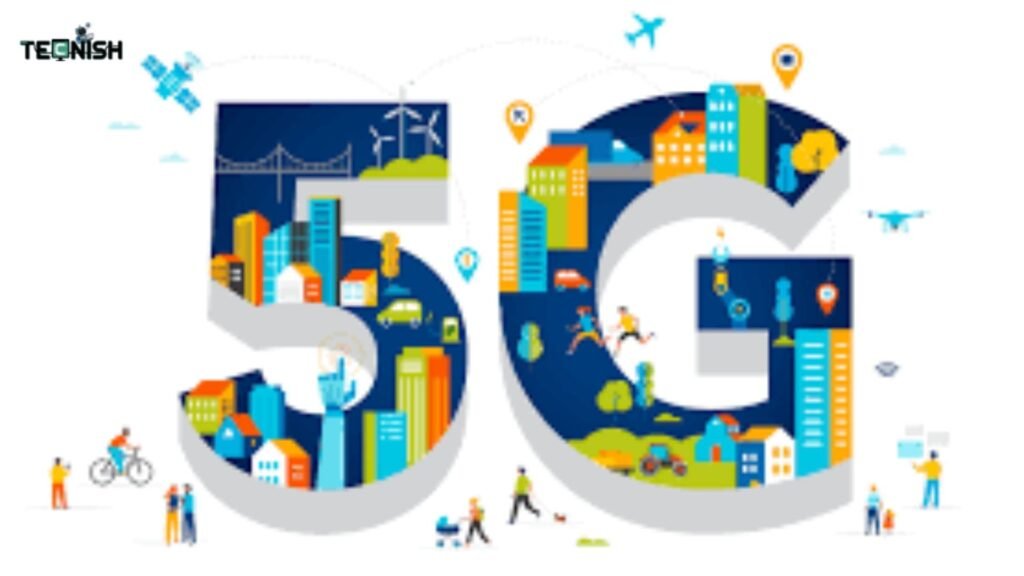

Introduction: Unlocking the Future with 5G in 2025
Do you know exactly How 5G Will Change Your Internet Experience in 2025? The internet has become more than just a convenience—it is the backbone of modern life. From streaming your favorite shows and connecting with friends to working remotely and controlling smart devices, our daily routines depend on fast and reliable connectivity.
As technology evolves, so do our expectations for speed, reliability, and responsiveness. Enter 5G technology—the next-generation wireless network that promises to redefine how we experience the digital world by 2025.
In this article, we will discuss everything in great depth and at a super level of detail. We will try to explain it to you as easily as possible, but with detailed examples and references, just like in this article, The Rise of AI Assistants in 2025.
Understanding 5G Technology
5G, short for fifth-generation wireless technology, is designed to deliver unprecedented speeds, ultra-low latency, and massive connectivity for a multitude of devices simultaneously. Unlike its predecessor, 4G LTE, which primarily focused on mobile internet for individual devices, 5G is engineered to support the explosive growth of the Internet of Things (IoT), smart cities, cloud vs edge computing, and immersive technologies such as AR/VR gaming.
By 2025, 5G networks will be the foundation of a connected ecosystem, enabling innovations that were once only imagined in science fiction.
How Does 5G Work?
At its core, 5G operates by using a combination of high-frequency millimeter waves, small cell networks, and advanced MIMO (Multiple Input, Multiple Output) antennas. This combination allows for faster data transmission, reduced network congestion, and the ability to connect thousands of devices in a single area without compromising performance. Essentially, 5G transforms the way data flows, ensuring instant responsiveness for both personal and industrial applications.
How Fast is 5G Internet?
One of the most talked-about features of 5G is its blazing speed. While 4G typically offers speeds between 10 to 50 Mbps, 5G internet can reach theoretical peaks of over 1 Gbps. Even in real-world scenarios, users can expect hundreds of Mbps, drastically reducing download times, eliminating buffering during high-definition streaming, and enabling smooth cloud-based gaming experiences.
By 2025, 5G speed will become a game-changer for homes, businesses, and mobile professionals alike.
Core Enhancements: Speed, Latency, and Capacity
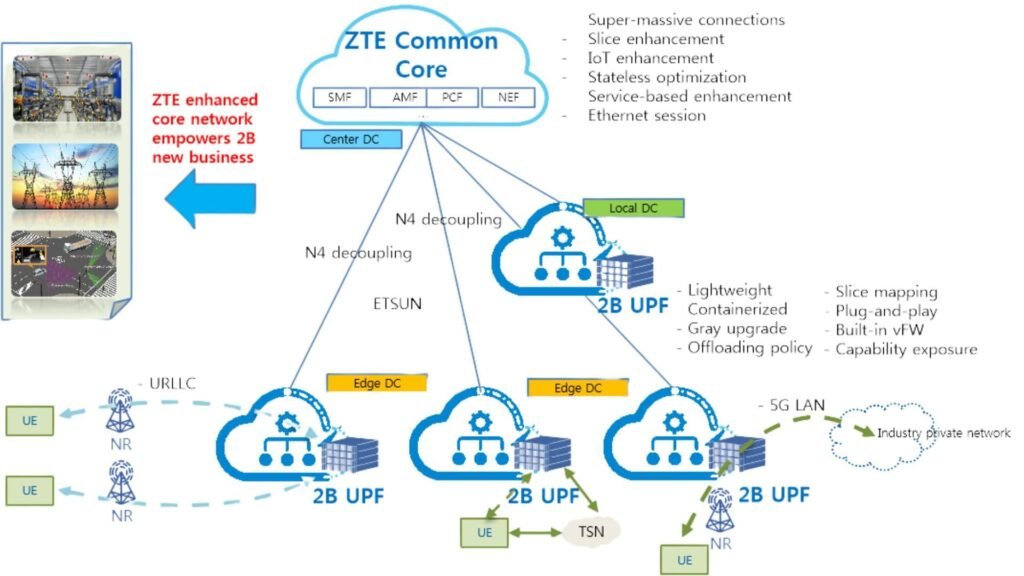
As 5G rolls out worldwide, its impact goes far beyond just faster downloads. The network brings three fundamental enhancements—speed, latency, and capacity—that will reshape how we live, work, and play by 2025.
Unmatched Speed: A Quantum Leap from 4G/3G
5G speed is the headline-grabbing feature everyone talks about—and for good reason. While 3G networks offered download speeds around 1–2 Mbps and 4G LTE improved this to 10–50 Mbps, 5G is set to deliver real-world speeds ranging from 100 Mbps up to 1 Gbps or more.
| Feature | 3G | 4G LTE | 5G (2025) |
|---|---|---|---|
| Download Speed | 1–2 Mbps | 10–50 Mbps | 100–1000+ Mbps |
| Latency | 100–500 ms | 50–100 ms | 1–5 ms |
| Device Capacity | Low | Moderate | Very High |
This speed jump transforms everyday activities. Download full-length 4K movies in seconds, stream 8K videos without buffering, and enjoy cloud gaming at console quality—all from your smartphone.
Ultra-Low Latency for Instant Responsiveness
Latency—the delay between sending a command and receiving a response—is where 5G truly outshines older networks. 3G networks had latencies of 100–500 milliseconds, and 4G reduced this to 50–100 milliseconds. 5G brings latency down to an astonishing 1–5 milliseconds, effectively eliminating delays.
This ultra-low latency is critical for applications that require real-time interaction:
- Online gaming: Lag-free, immersive experiences
- AR/VR: Seamless virtual worlds and interactive learning
- Smart devices: Instant response for IoT applications and home automation
Massive Device Connectivity
5G doesn’t just focus on speed—it also massively increases network capacity. While 4G can handle hundreds of devices per square kilometer, 5G supports up to one million devices in the same area. This is essential for the growing Internet of Things (IoT) ecosystem.
Imagine: smart cities with connected traffic lights, sensors monitoring energy usage, and millions of devices communicating simultaneously without congestion. Your smart home, office, and public infrastructure will operate smoothly and reliably, thanks to 5G’s enhanced capacity.
The Game-Changing Impact of 5G on Entertainment, Gaming, and AR/VR

If there’s one area where 5G technology will truly shine, it’s entertainment. From movies and music to gaming and immersive technologies, 5G is set to transform how people consume and interact with digital content.
Seamless Streaming and On-Demand Content
By 2025, buffering will be a thing of the past. 5G speed ensures instant, high-quality streaming, even during peak hours. Platforms like Netflix, YouTube, and Disney+ are already preparing for 8K video streaming, which requires massive bandwidth.
- 4K and 8K movies download in seconds
- Live sports broadcasts stream without lag or frame drops
- Interactive concerts & events with multi-angle views in real-time
Cloud Gaming Without Limits
For gamers, latency is the enemy. With 4G, online multiplayer often suffered from delays. But with 5G’s 1–5 ms latency, cloud gaming becomes a reality. Gamers no longer need expensive consoles or PCs; they can stream AAA titles directly to their smartphones.
Examples of 2025 Predictions:
- Services like Xbox Cloud Gaming and NVIDIA GeForce Now will dominate mobile gaming.
- Esports tournaments will run flawlessly on 5G, attracting millions of mobile players.
- Cross-platform play will become seamless, with no lag between console, PC, and mobile gamers.
AR and VR: Immersive Experiences
The most exciting transformation will come from augmented reality (AR) and virtual reality (VR). These technologies require high bandwidth and ultra-low latency to deliver smooth, immersive experiences—and 5G is the key.
- Education & Training: Students will attend VR classrooms, surgeons will practice complex operations in AR simulations.
- Travel & Tourism: Virtual travel experiences will allow users to “visit” historical sites in real-time 3D.
- Gaming & Social Media: Fully immersive AR/VR social platforms will become mainstream by 2025.
Prediction for 2025: Entertainment Without Boundaries
By 2025, 5G-powered entertainment will go beyond passive consumption. Users will actively participate in content through VR concerts, AR-enhanced live sports, and interactive cinema. The line between the digital and physical worlds will blur, making entertainment a fully immersive, shared experience.
Unlock the Potential of 5G in Your Operations
While most people think of 5G as just “faster internet,” businesses and industries know it’s much more than that. From factories to remote workers, 5G is unlocking operational efficiency, real-time decision-making, and completely new possibilities.
Benefits of 5G in Work & Industry
- Ultra-low latency: Machines, sensors, and devices can communicate in real time—critical for manufacturing, healthcare, and logistics.
- Higher capacity: Supports thousands of IoT devices simultaneously without congestion.
- Mobility & flexibility: Professionals can work anywhere with consistent high-speed connections.
- Energy efficiency: Smarter use of bandwidth reduces overall energy consumption in networks.
The Role of Private 5G Networks
For enterprises, private 5G networks are becoming the next big competitive edge. Instead of depending on public carriers, companies set up their own secure, high-speed 5G systems within factories, campuses, or warehouses.
Key benefits of private 5G:
- Stronger security & data control (no reliance on public networks).
- Guaranteed performance for mission-critical operations.
- Customizable for industry-specific needs (e.g., healthcare compliance, factory automation).
Real-Life Applications of 5G in Industry
Smart Cities & IoT:
From traffic management to environmental monitoring, city infrastructure will rely on 5G-connected IoT sensors for safer, more efficient urban living.
Smart Factories:
Manufacturers like Bosch and Siemens are testing 5G-enabled robots and IoT sensors. These systems detect machine faults instantly, reducing downtime and increasing efficiency.
Remote Work & Mobile Professionals:
5G enables seamless video conferencing, real-time file sharing, and cloud access. Mobile professionals—consultants, field engineers, and sales teams—can operate without worrying about weak connectivity.
Healthcare:
Doctors can perform remote diagnostics or even robotic-assisted surgeries with real-time data transmission. Ambulances equipped with 5G can send patient vitals to hospitals before arrival.
Smart Cities + Connected Living with 5G

By 2025, 5G technology will be the backbone of smart cities and connected living, creating urban environments that are more efficient, sustainable, and secure. With 5G speed, ultra-low latency, and massive IoT capacity, entire communities will operate on smarter systems—from traffic to healthcare.
How 5G Powers Smart Cities
- Public Services: Real-time data collection improves emergency response, smart policing, waste management, and healthcare services.
- Traffic & Transport: 5G enables connected vehicles, predictive traffic lights, and reduced congestion with live updates.
- Energy Management: Smart grids powered by 5G networks optimize electricity distribution, reduce outages, and cut energy costs.
Connected Living: Smart Homes of the Future
- Home Automation: 5G makes smart home devices faster, more reliable, and fully interconnected—lights, locks, and security cameras responding instantly.
- Energy Efficiency: Smart thermostats and appliances adapt in real time, saving electricity and reducing bills.
- Healthcare at Home: Wearables and remote monitoring devices send real-time health data to doctors via secure 5G connections.
Why 5G is a Game-Changer for Cities & Homes
Seamless IoT integration creates a truly connected ecosystem.
Unmatched 5G capacity ensures thousands of sensors and devices work without network congestion.
Ultra-fast 5G speed provides smooth streaming, instant responses, and high reliability for public and personal use.
History + Credibility of 5G
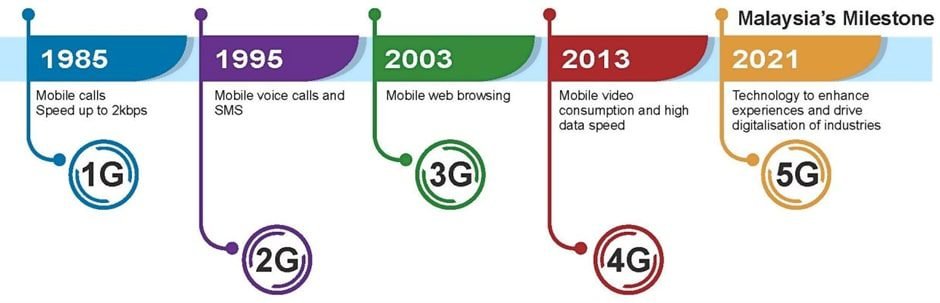
The Evolution and Impact of 5G Technology
Wireless communication has come a long way in just a few decades:
- 1G (1980s): Analog voice calls.
- 2G (1990s): Digital voice and SMS.
- 3G (2000s): Mobile internet and multimedia.
- 4G (2010s): High-speed broadband, streaming, and social media boom.
- 5G (2020s–2025): Ultra-fast speeds, IoT integration, smart cities, and real-time applications like AR/VR and autonomous vehicles.
The impact of 5G technology goes far beyond mobile phones. It is creating smarter healthcare, industrial automation, intelligent transport systems, and hyper-connected urban living. Experts agree that 5G is the stepping stone to 6G development, expected later this decade.
Who Invented 5G Technology?
Unlike 4G, which had more centralized development, 5G was created through global collaboration between industry leaders, research institutions, and standardization bodies.
- Qualcomm pioneered many of the key 5G technologies (like mmWave and massive MIMO).
- Nokia and Ericsson played major roles in infrastructure development.
- 3GPP (3rd Generation Partnership Project) finalized global 5G standards.
- Early test deployments began in 2018, with countries like South Korea, the U.S., and China leading the rollout.
So while no single person “invented 5G”, it’s the result of a worldwide effort by engineers, researchers, and telecom innovators.
References
- Qualcomm – What is 5G?
- 3GPP Official 5G Standards
- Ericsson: The Evolution of 5G
- Nokia 5G Technology Overview
Challenges and Considerations of 5G Technology
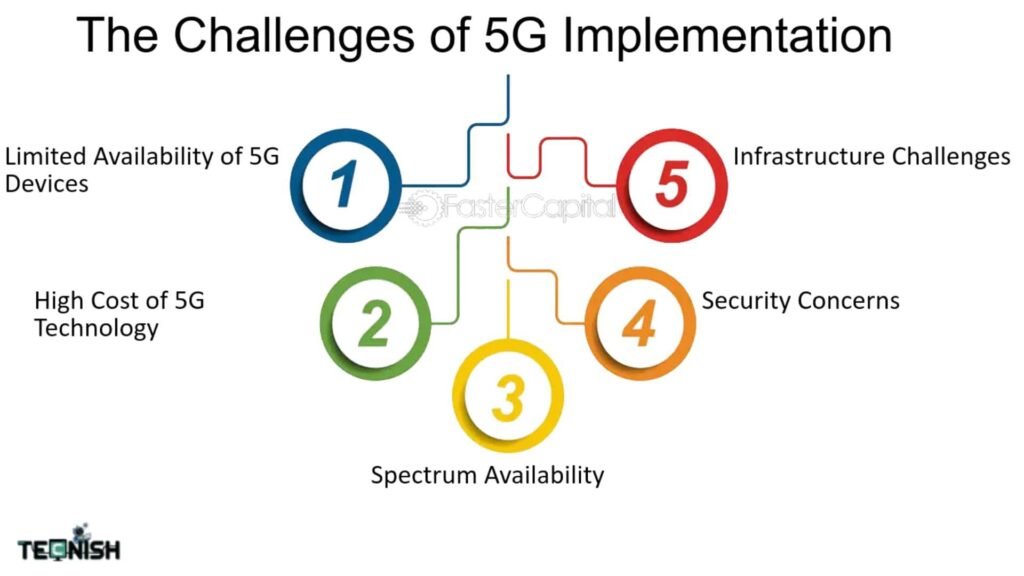
While 5G technology is a game-changer for speed, connectivity, and innovation, it also comes with hurdles that industries, governments, and consumers must address.
5G Network Deployment Challenges
Rolling out 5G networks requires massive infrastructure investments—such as small cell towers, fiber backbones, and advanced antennas. Urban areas are usually the first to get upgrades, while rural and remote regions risk being left behind.
5G Coverage Limitations
Despite the hype, 5G coverage is not yet universal. High-frequency mmWave 5G delivers lightning speed but struggles with range and building penetration. Sub-6GHz offers wider coverage but at lower speeds. This mix can confuse consumers and limit real-world performance.
The Cost of 5G Adoption
Building and maintaining 5G infrastructure is expensive, and those costs often trickle down to businesses and end-users. Consumers may face higher mobile plan prices, while enterprises investing in private 5G must weigh ROI (return on investment).
5G Security and Privacy Concerns
With billions of devices connected through IoT, 5G cybersecurity becomes a top priority. More connections mean more entry points for hackers. Concerns include:
- Data breaches through IoT sensors.
- National security risks tied to foreign infrastructure providers.
- Privacy challenges in smart cities where constant data collection is the norm.
Balancing Innovation with Responsibility
To fully unlock the benefits of 5G, stakeholders must find ways to balance coverage, cost, and security with the need for innovation. Without addressing these issues, the global 5G vision could fall short of expectations by 2025.
The Role of Government and Policy in 5G Development
Global Spectrum Allocation and Regulation
Global spectrum allocation and regulation are critical for the successful rollout of 5G networks. Governments and international bodies like the FCC in the U.S., the EU Commission, and the ITU coordinate spectrum licensing and technical standards to ensure seamless connectivity across regions.
These regulations also establish strict cybersecurity and vendor policies, ensuring that 5G infrastructure is reliable, secure, and scalable.
National 5G Strategies
National 5G strategies highlight how countries treat this technology as a cornerstone for economic growth. Programs such as the U.S. 5G FAST Plan, the EU’s Digital Decade 2025 goals, and China’s rapid nationwide deployment demonstrate strategic planning to accelerate adoption.
Developing nations, including Bangladesh through the BTRC, are also implementing frameworks to make 5G accessible and affordable across both urban and rural areas, fostering inclusive digital development.
Policy and Security Implications
Policy and security considerations remain essential as 5G expands into critical sectors like healthcare, transportation, and smart city infrastructure. Effective regulations balance innovation with robust cybersecurity measures, protecting sensitive data and ensuring network safety.
Strong government policies ultimately enable faster deployment, lower costs, and a secure, high-performance 5G experience for users, businesses, and industries alike.
Conclusion + Future Outlook
By 2025, 5G technology will no longer be a futuristic promise—it will be the foundation of our connected lives. From powering smart cities and autonomous vehicles to transforming gaming, healthcare, and global businesses, 5G will create a digital ecosystem where speed, capacity, and real-time responsiveness are the new normal.
Yet, its success depends on overcoming challenges like network deployment, cost, and security risks. As industries invest in private 5G networks and governments push for wider adoption, the future of 5G looks set to redefine how we live, work, and interact.
👉 What’s next for you?
And if you’re a tech enthusiast, keep an eye on the evolution from 5G to 6G over the next decade.
If you’re a business leader, now is the time to explore private 5G benefits for your operations.
If you’re a consumer, prepare for smarter devices, immersive entertainment, and faster everyday internet.
FAQs
Q1: How fast is 5G compared to 4G?
A: 5G can be 20–50 times faster than 4G, offering download speeds up to 1 Gbps or more.
Q2: Will 5G work on my current device?
A: Only 5G-compatible devices can access the network. Older phones may need an upgrade.
Q3: Can 5G improve online gaming and streaming?
A: Absolutely. Reduced latency and higher speeds make cloud gaming, AR/VR, and 8K streaming seamless.
Q4: Is 5G safe for home networks and IoT devices?
A: Yes, but strong cybersecurity practices like unique passwords, regular updates, and two-factor authentication are essential.
Q5: Will 5G be available everywhere by 2025?
A: Coverage will vary. Urban areas likely have widespread 5G, while rural regions may take longer to deploy.
Author Bio
Mamun Khan Rabbiis a full-stack digital marketer and technology writer passionate about simplifying complex topics like 5G, AI, and emerging tech trends. With years of hands-on experience in SEO, content strategy, and digital growth, Mamun helps businesses stay ahead of Google updates and leverage cutting-edge innovations to drive results.
He specializes in breaking down technical subjects into clear, actionable insights for readers, ensuring that every article delivers both real-world expertise and practical value. When he’s not optimizing websites or analyzing the latest algorithm shifts, Mamun enjoys experimenting with smart gadgets and staying on top of global tech trends.
📬 Connect with Mamun: | Facebook |