
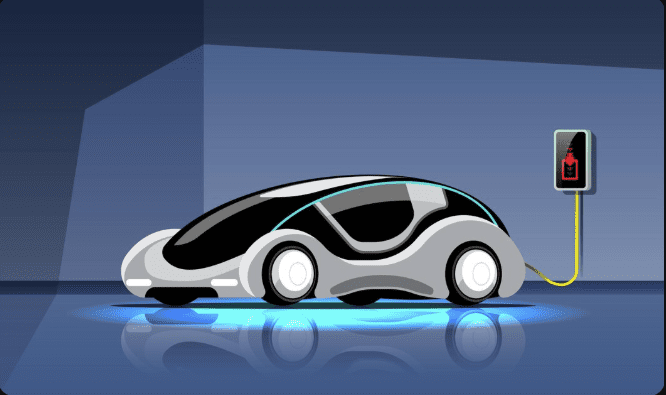

In April, production of Tesla’s long-anticipated Cybercab is officially set to begin-marking one of the boldest moves yet in the autonomous vehicle race. Unlike any traditional car on the road today, the two-seat tesla robotaxi will launch without a steering wheel or pedals, signaling a decisive shift toward a fully driverless future. For CEO Elon Musk, this isn’t just another product rollout-it’s a statement. After reaffirming the April timeline multiple times, Musk is clearly doubling down on the vision that artificial intelligence, not human drivers, will define the next era of transportation.
Backed by Tesla’s Texas Gigafactory, the Cybercab represents more than an electric vehicle-it’s a purpose-built autonomous machine designed to disrupt both car ownership and ride-hailing economics. But with no manual controls and ambitious production targets, the question grows louder: Is Tesla engineering a transportation revolution, or taking its biggest strategic risk yet?
As the global auto industry watches closely, the Cybercab may determine whether fully autonomous mobility is finally ready for mainstream adoption—or still ahead of its time.
What Is the Tesla Cybercab?
The Tesla Cybercab is a two-seat, fully autonomous tesla robotaxi designed from the ground up for a driverless future. Unlike conventional electric vehicles, this purpose-built machine does not include a steering wheel, pedals, or any manual driving controls. It is engineered exclusively for AI-powered navigation, signaling Tesla’s confidence in achieving unsupervised full self-driving capability at scale.
Manufactured at Tesla’s Texas Gigafactory, the Cybercab is not merely another addition to the company’s EV lineup – it represents a structural rethinking of how vehicles are built and deployed. Rather than adapting an existing car platform for autonomy, Tesla designed the Cybercab specifically for artificial intelligence operation. This purpose-built autonomy allows the company to eliminate components required for human control, reduce complexity, and potentially lower long-term operating costs.
Even more ambitious is Tesla’s radical manufacturing redesign. CEO Elon Musk has indicated that the Cybercab production 2026 line aims to achieve unprecedented efficiency, with long-term goals of producing one vehicle roughly every 10 seconds once fully ramped. If realized, this would mark a dramatic shift in automotive manufacturing speed and scalability.
By combining AI-first vehicle architecture with aggressive production targets, Tesla is positioning the Cybercab as both a technological breakthrough and an industrial experiment in next-generation mobility.
Why Musk Calls It a Manufacturing Revolution
For Elon Musk, the Cybercab isn’t just a new vehicle—it’s a reinvention of how cars are built. Musk has claimed the production system behind the tesla robotaxi could achieve up to five times higher output rates than conventional automotive assembly lines. That bold statement signals more than incremental improvement; it suggests a structural overhaul of manufacturing logic itself.
At the center of this vision is a radically redesigned assembly architecture. Instead of the traditional linear production model used in most EV factories, Tesla is reportedly implementing a modular, highly automated system optimized specifically for a simplified, autonomy-first vehicle. By eliminating steering systems, pedals, and other human-control components, the Cybercab reduces mechanical complexity—potentially enabling faster assembly, fewer parts, and lower labor intensity.
The long-term ambition is even more aggressive: Tesla aims to scale Cybercab production to 2–4 million units annually across multiple factories. If achieved, this would rival or surpass the output of many global automakers’ best-selling models. Compared to traditional EV manufacturing—where ramp-ups often take years and production bottlenecks are common—Tesla’s proposed model emphasizes speed, vertical integration, and extreme automation.
This raises a compelling question: could the Cybercab represent the “ Just as smartphones redefined consumer electronics through design simplification and manufacturing scale, Tesla may be attempting to compress innovation and industrial efficiency into a single, transformative platform.
The Case for “Revolution”
If Tesla’s Cybercab succeeds, it may not just introduce a new vehicle—it could fundamentally reshape how people think about transportation, ownership, and urban mobility.
1. End of Personal Car Ownership?
One of the most disruptive implications of the Cybercab is the potential shift from private car ownership to mobility-as-a-service. Instead of buying and maintaining a personal vehicle, consumers could summon an autonomous robotaxi on demand. This model mirrors how streaming replaced DVDs and ride-hailing challenged traditional taxis. If a Cybercab network becomes widely available and affordable, owning a car could start to feel unnecessary – especially in urban areas where parking, insurance, and maintenance costs are high.
For Tesla, this transition could unlock recurring revenue through a large-scale autonomous fleet rather than one-time vehicle sales.
AI-First Transportation
The absence of a steering wheel and pedals is more than a design choice – it represents a psychological shift. By removing manual controls entirely, Tesla signals full confidence in artificial intelligence as the primary driver. This AI-first approach reframes transportation as a software-powered service rather than a human-operated machine.
For CEO Elon Musk, it reinforces the idea that the future of mobility belongs to autonomous systems, not human reflexes.
Cost Disruption
If Tesla achieves high production efficiency and low operating costs, Cybercab rides could undercut traditional ride-hailing services like Uber or Lyft. Without paying human drivers, per-mile costs could fall significantly, making autonomous transport cheaper and more scalable.
Urban Transformation
Widespread robotaxi adoption could reduce parking demand, free up city space, and enable smarter traffic flow through AI coordination. Over time, cities could be redesigned around shared mobility rather than privately parked vehicles – ushering in a more efficient, data-driven urban ecosystem.
The Case for “Risk”
While the Cybercab presents a bold technological leap, it also carries substantial strategic and market risks. The very elements that make it revolutionary could become barriers to adoption.
Consumer Psychology Problem
Will people truly embrace a car with no steering wheel or pedals?
For decades, driving has symbolized control, independence, and personal freedom. Removing manual controls entirely forces consumers to surrender that control to software. Even if autonomous systems prove statistically safer, trust does not shift overnight. Many buyers prefer autonomy as an option—not a requirement.
By eliminating human override completely, Tesla is making a high-stakes bet on behavioral change. The psychological hurdle may prove harder to overcome than the technological one.
Regulatory Barriers
Autonomous vehicles operate in one of the most heavily regulated industries in the world. In the United States, full deployment depends on federal and state-level safety approvals. Any accident involving a fully driverless Cybercab could trigger investigations, delays, or stricter oversight.
Globally, compliance becomes even more complex. Different countries maintain varying safety standards, insurance frameworks, and liability laws. Scaling an unsupervised robotaxi fleet across international markets may require navigating a patchwork of regulatory systems – slowing expansion plans.
Production Reality
CEO Elon Musk has acknowledged that early Cybercab production will be “agonizingly slow.” While long-term goals include extreme output speeds, ramping up an entirely new manufacturing system is rarely seamless.
Tesla’s history includes ambitious timelines followed by production bottlenecks and delays. If Cybercab production scaling faces similar obstacles, investor patience could thin quickly.
Limited Market Segment
The Cybercab is a two-seat vehicle designed specifically for shared mobility. However, most global car buyers still prefer multi-seat vehicles for families and flexibility. If demand for compact, two-seat autonomous taxis remains niche, Tesla’s projected volume assumptions may prove overly optimistic.
In short, the Cybercab’s success depends not only on engineering – but on trust, regulation, and real-world demand aligning at scale.
Investor Skepticism — Are Concerns Valid?
While the Tesla Cybercab promises a bold leap toward fully autonomous mobility, analysts and investors are raising critical questions about the strategy’s feasibility and market fit. Some experts argue that offering autonomy as a default rather than an optional feature conflicts with typical consumer behavior. Historically, drivers have preferred the ability to maintain control, and forcing full autonomy could limit adoption among mainstream buyers.
Additionally, Tesla’s volume assumptions for the Cybercab have been met with skepticism. CEO Elon Musk’s ambitious goal of producing up to 4 million units annually across multiple factories assumes rapid scaling of an entirely new manufacturing system. Critics warn that such projections may underestimate the challenges of supply chain management, regulatory compliance, and public acceptance.
Some analysts also point to strategic overconfidence as a potential risk. Tesla is simultaneously launching multiple cutting-edge products, including Cybercab and Optimus, which adds complexity and pressure to meet timelines. While Musk’s vision aligns with long-term industry disruption, investors question whether operational execution can keep pace with such ambitious goals.
Despite these concerns, a balanced perspective acknowledges Tesla’s history of overcoming production challenges and pushing technological boundaries. Tesla has repeatedly defied expectations, from mass-producing EVs to advancing autonomous driving capabilities. Whether the Cybercab becomes a triumph or a cautionary tale may ultimately hinge on Tesla’s ability to balance innovation with practical market realities.
This discussion highlights the delicate interplay between investor expectations, consumer behavior, and regulatory oversight – a core factor in determining whether the Cybercab will truly revolutionize transportation or emerge as a high-stakes gamble.
What Happens If Cybercab Succeeds?
If Tesla’s Cybercab delivers on its ambitious promise, the company could transform from a car manufacturer into a global mobility platform. By operating a fleet of fully autonomous robotaxis, Tesla could generate recurring revenue streams far beyond traditional vehicle sales. Each ride would contribute to a scalable, software-driven business model—turning the streets into a real-time network of AI-managed transportation.
Success would also unlock massive valuation upside. Investors may begin to value Tesla not just for its electric vehicles but for its dominance in autonomous mobility, akin to a tech platform controlling both hardware and service. This positions the company as a leader in AI-powered transportation, capable of outpacing competitors who still rely on human drivers.
Beyond financial gains, a successful Cybercab rollout could redefine urban mobility itself: less congestion, smarter city infrastructure, and a shift away from private car ownership. In essence, Tesla would not just be selling cars—it would be selling the future of how people move.
The Cybercab, if fully realized, represents a rare convergence of technology, scale, and vision – a revolution that could cement Tesla’s role at the forefront of autonomous transportation.
What Happens If It Fails?
While the potential rewards of the Cybercab are enormous, failure could carry significant consequences for Tesla. A high-profile misstep might result in brand damage, undermining Tesla’s image as a pioneer in autonomous mobility. Consumer trust in the company’s AI-driven technology could erode, making it harder to introduce future innovations.
Financially, the ambitious project demands massive capital investment. Delays, production bottlenecks, or low adoption could lead to substantial capital loss, straining resources and affecting other strategic initiatives.
A failed rollout could also trigger regulatory backlash. Fully autonomous vehicles operate under strict oversight, and any safety incidents could provoke tighter restrictions, slowing expansion in key markets like the United States and abroad.
Investor confidence would likely take a hit as well. Analysts and shareholders who already question Tesla’s volume assumptions and strategic overconfidence might grow wary, potentially impacting stock valuation and the company’s ability to fund bold projects in the future.
In short, while the Cybercab carries revolutionary potential, missteps could ripple across Tesla’s brand, finances, regulatory standing, and investor trust, highlighting the high-stakes nature of this ambitious gamble.
Final Verdict — Bold Genius or Strategic Gamble?
The Tesla Cybercab sits at the intersection of innovation, ambition, and risk. On one hand, it represents a potential leap forward in autonomous mobility: a purpose-built robotaxi designed to operate without human intervention, backed by Elon Musk’s vision and Tesla’s technological expertise. If successful, it could transform the transportation industry, redefine urban mobility, and create a new revenue paradigm through large-scale autonomous fleet operations.
On the other hand, the project carries considerable challenges. Consumer adoption, regulatory hurdles, production scalability, and market demand all introduce uncertainty. Investor skepticism is not unfounded, and even minor missteps could have disproportionate financial and reputational consequences.
Ultimately, the Cybercab embodies the dual nature of Tesla’s approach: audacious innovation coupled with high-risk execution. Its success or failure will provide critical insight into whether the automotive world is ready for fully autonomous mobility.
The Cybercab may either redefine transportation — or redefine the limits of Musk’s ambition.
FAQ Section (Schema Ready)
Q1: When will Tesla Cybercab production start?
A1: Tesla Cybercab production is set to begin in April 2026 at the Texas Gigafactory. CEO Elon Musk has confirmed the timeline multiple times.
Q2: Does Tesla Cybercab have a steering wheel?
A2: No, the Cybercab is designed without a steering wheel or pedals. It is fully purpose-built for autonomous driving.
Q3: Where is the Cybercab being manufactured?
A3: The Cybercab is being manufactured at Tesla’s Texas Gigafactory, specifically designed for high-volume autonomous vehicle production.
Q4: How many units does Tesla plan to produce annually?
A4: Tesla aims to eventually produce 2–4 million Cybercabs per year across multiple factories once the production line is fully ramped up.
Q5: Is Tesla Cybercab fully autonomous?
A5: Yes, the Cybercab is fully autonomous, meaning it is designed to operate without any human driver or manual controls.